Hidden Object Search 2: More Fun – Scene-by-Scene Observation Guide
What Kind of Game Is This?
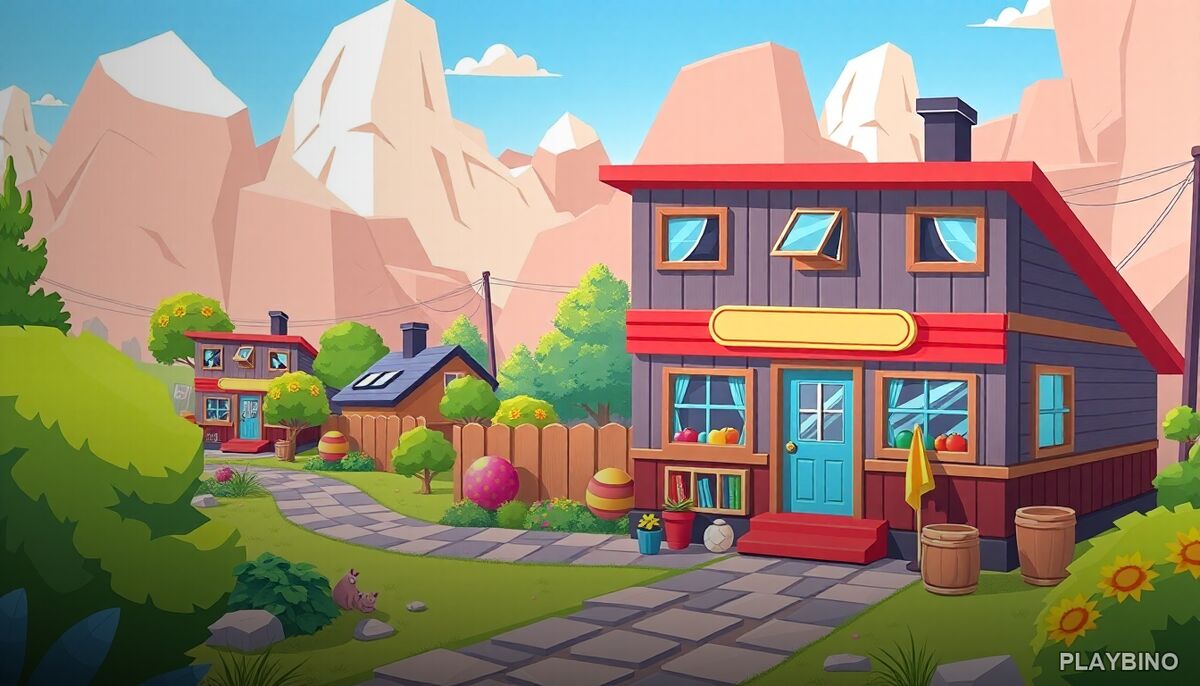
Not every puzzle game asks you to move pieces or solve equations. Hidden Object Search 2: More Fun takes a different approach — it asks you to slow down, look carefully, and find what's hiding in plain sight. Each level drops you into a richly illustrated scene packed with everyday items cleverly blended into their surroundings. The challenge isn't speed. It's attention. Play it directly in your browser and you'll quickly realize how much detail each scene holds.
How the Scenes Are Built
The environments range from cluttered indoor spaces to busy outdoor settings, and each one is designed to confuse your eye. Objects don't just sit in the open — they nestle inside patterns, hide behind shadows, or match the color of surrounding elements so closely that a quick glance won't catch them.
As you progress through levels, the scenes become more complex. New themes introduce different object combinations, and the visual noise increases. What felt manageable in an early interior scene becomes a real mental workout in a later, more layered environment.
Camouflage Techniques
The game uses several visual tricks to make objects harder to spot. Color matching is one of the most common — an item might share the same tone as the wallpaper or floor behind it. Shadow blending is another, where objects appear as part of a darker area rather than standing out. Scale distortion is occasionally used too, making familiar objects appear smaller or larger than expected.
Controls and Interaction
The control scheme is intentionally minimal. You click or tap on the object you believe matches the target. There are no complex mechanics to learn, no timers forcing rushed decisions in early stages, and no inventory management. The entire focus stays on observation and memory — exactly what a brain and puzzle game in this style should prioritize.
This simplicity is a strength. It means the difficulty comes entirely from the scene design rather than from learning a system. New players can start immediately without any tutorial friction.
Search Strategy That Actually Works
Systematic Scanning
Random clicking rarely pays off. The most effective approach is to divide the scene into mental zones and scan each one methodically before moving to the next. Start from one corner and work across in rows, rather than jumping to wherever your eye is drawn first.
Using the Target List
Keep the list of objects you need to find visible as you scan. Rather than memorizing the full list, focus on one item at a time. Visualize its shape and likely size, then look for that specific silhouette within each zone. This reduces the cognitive load and speeds up each find.
Who Plays This Type of Game
Hidden object games sit at an interesting crossroads between casual gaming and genuine cognitive exercise. The memory and brain demands are real — sustained visual focus, pattern recognition, and spatial awareness all come into play. Players who enjoy logic puzzles, spot-the-difference challenges, or any game that rewards careful thinking tend to find this format satisfying.
It also works well in short sessions. A single level can be completed in a few minutes, making it easy to pick up and put down without losing progress or momentum. Mystic Object Hunt is another browser game built around the same kind of careful searching — that hidden object experience offers a different visual theme worth exploring alongside this one.
Progression and Replay Value
Completing a level unlocks the next, with each new scene bringing a fresh theme and a different set of objects to locate. The difficulty curve is gradual enough that early levels build confidence before the later stages start demanding more from your observation skills.
PlayBino hosts a range of puzzle and brain games, and Hidden Object Search 2: More Fun fits naturally into that catalog for anyone who prefers games that reward patience over reflexes. The increasing scene complexity keeps the experience from feeling repetitive, and the variety of environments gives each level its own distinct character.