Jet Fighter Pacific War: Aerial Combat Guide and Strategy Tips
Taking to the Skies Above the Pacific
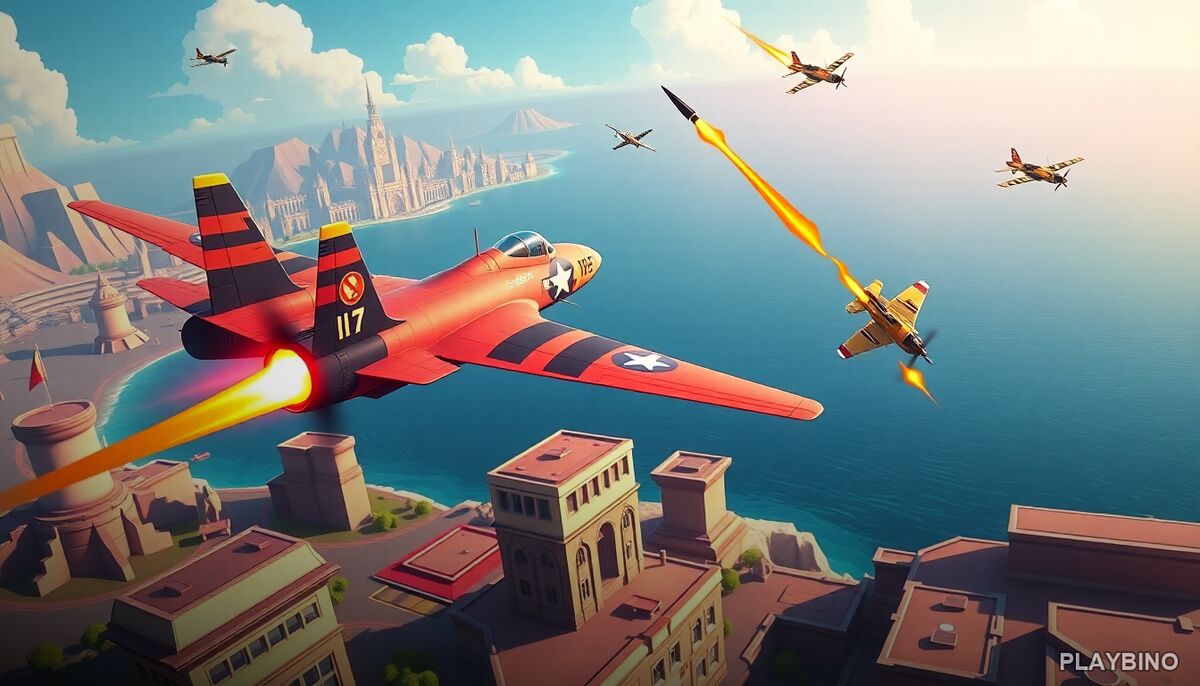
Not every browser arcade game puts you in a full aerial combat scenario with enemy squadrons, battleships, and timed ammunition. Jet Fighter Pacific War does exactly that. You pilot a warplane across the Pacific theater, hunting down enemy formations while staying alive long enough to complete each sortie. The full challenge runs directly in your browser with no download required, making it easy to jump into a mission whenever you have a few minutes.
What Each Mission Demands
The game structures its action around individual sorties, each one layering new threats on top of familiar mechanics. Early missions introduce basic interception — you identify enemy planes, line up a shot, and fire before they can retaliate. As the campaign progresses, the opposition gets more complex.
Enemy Types
Nimble interceptors are the most immediate threat. They move quickly, change direction unpredictably, and can get behind you if you commit too hard to a single attack run. Heavily armed battleships present a different problem entirely — they don't move, but they fill the air around them with flak fire that punishes any straight approach.
Convoy Escorts
Some missions send you after convoy escorts protecting supply ships. These require a different rhythm. You need to dive through cloud cover, pick your target, fire, and climb away before the escort formation can coordinate a response. Staying low and slow is a trap here — altitude gives you options.
Controls and Positioning
The controls are deliberately simple. Movement, aiming, and firing cover most of what you need. That simplicity shifts the mental load onto positioning decisions rather than button combinations. Where you are in the air relative to enemies matters more than reaction speed alone. One poorly timed turn can place you in the crosshairs of two or three threats at once, and recovering from that situation burns both time and ammunition.
Ammunition management is a real constraint. Runs don't refill mid-mission, so burning through your supply on low-priority targets leaves you vulnerable when reinforcements arrive. Prioritize threats that are actively tracking you before engaging stationary or distant targets.
Timing Your Attacks
Timing separates clean sorties from chaotic ones. The game rewards patience — waiting for an enemy to commit to a flight path before firing, rather than spraying shots and hoping for contact. Tracer fire from enemy planes gives you visual feedback on their aim, which also tells you when they're momentarily not adjusting. That's your window.
Reinforcements arrive without warning, which means finishing engagements quickly reduces the risk of being caught mid-reload or mid-turn when a new wave enters the area. Aggressive, decisive attacks followed by immediate repositioning is generally more effective than drawn-out exchanges.
Who This Game Suits
Jet Fighter Pacific War fits players who enjoy action and shooting mechanics with an arcade feel rather than a simulation. There's no fuel management, no landing sequences, no complex loadout screen. The focus stays on the combat loop — fly, aim, fire, evade, repeat. If you've played similar shooting-focused arcade titles on PlayBino, the rhythm here will feel familiar but with a stronger emphasis on spatial awareness and threat prioritization.
Poppy Strike 3 takes a ground-based shooting approach, and that first-person combat experience is worth comparing if you want a different angle on arcade shooting mechanics.
Staying Alive Longer
- Never fly in a straight line for more than a few seconds when enemies are active.
- Use cloud cover to break enemy targeting before repositioning.
- Engage the most mobile threats first — stationary targets can wait.
- Save ammunition by confirming a firing solution before shooting.
- When reinforcements arrive, gain altitude immediately to reassess the situation.
The game doesn't punish aggression, but it does punish carelessness. Players who treat each mission as a tactical problem rather than a reflex exercise tend to last significantly longer and score higher across sorties.
"