Joyful Ball: Physics Puzzle Game Where Placement Is Everything
What Joyful Ball Actually Is
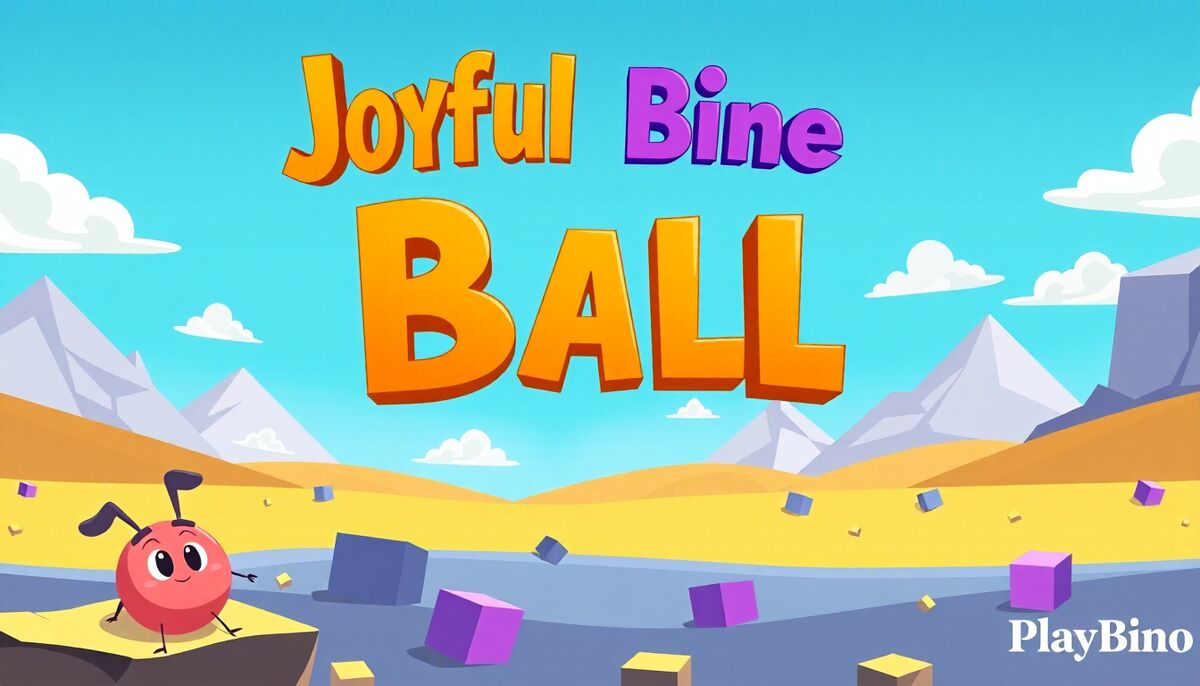
At first glance, Joyful Ball looks like a simple balancing game. A round character with an expressive face needs to roll from its starting position to a set of glass bottles, and your job is to build the path that gets it there. But the moment you place your first block and watch the physics kick in, the real challenge becomes clear. Every piece you set down interacts with the others, swaying under weight, shifting with momentum, and sometimes collapsing entirely when you least expect it.
The game sits firmly in the brain puzzle category, rewarding spatial thinking over reflexes. You can play this physics-based challenge directly in your browser without any downloads or installs.
The Core Mechanic: Block Placement and Physics
The central loop is straightforward. Each stage presents a layout with a starting point, a ball, and one or more glass bottles placed at varying heights and distances. You arrange a set of blocks to create a stable enough structure for the ball to roll across and reach those bottles.
How Physics Shapes Every Decision
The blocks are not static once placed. They respond to the ball's weight and movement with realistic physics simulation. A platform that looks stable might tilt slightly as the ball rolls to one edge, sending it off course. Stacking blocks too high creates instability. Placing them at the wrong angle changes the roll speed entirely. The game never lets you treat placement as a formality.
The Role of Precision
One miscalculation is usually enough to reset your attempt. There is no mid-run correction. If the ball falls short or the structure collapses, you start the stage again with a clearer picture of what went wrong. This feedback loop is tight and genuinely useful — failure teaches you something specific almost every time.
Stage Design and Increasing Complexity
Early stages introduce the basics gently. The gaps are short, the bottle positions are obvious, and the block count is manageable. As levels progress, the arrangements become less forgiving. Bottles appear at awkward heights. Starting positions shift. The number of available blocks stays limited, which means wasted placements become a real problem rather than a minor setback.
New obstacle types and spatial configurations emerge across the stage progression, keeping the puzzle logic fresh without changing the core rules. The game does not introduce power-ups or shortcuts. Progress comes entirely from understanding the physics better and planning more carefully before committing to a placement.
Strategy Tips That Actually Help
- Study the bottle positions before placing anything. Know your endpoint before building toward it.
- Start from the ball's position and work outward rather than trying to connect both ends at once.
- Avoid stacking blocks vertically unless necessary. Horizontal paths are more stable under rolling weight.
- Leave yourself a mental margin for tilt. If a block is slightly angled, the ball will drift in that direction.
- On stages with multiple bottles, prioritize the hardest-to-reach one first when planning your route.
Why the Puzzle Design Holds Up
Physics puzzles can feel arbitrary when the simulation is inconsistent, but Joyful Ball keeps its rules stable. The same placement produces the same result every time, which means the challenge stays fair. When you fail, it is because the structure was wrong, not because the physics behaved unexpectedly. That consistency is what makes the methodical approach satisfying rather than frustrating.
The cheerful face on the ball is a small design touch that adds more than it should. Watching it roll confidently across a well-built path or tumble off a poorly balanced one makes the feedback feel slightly more alive than a plain sphere would. It is a minor detail, but it keeps the tone light during repeated attempts.
If this style of weight-and-balance puzzle appeals to you, another puzzle built around physical balance covers Weight Puzzle 3D, which approaches similar spatial logic from a three-dimensional angle.
Who This Game Suits Best
Joyful Ball is built for players who prefer thinking over reacting. There is no timer pressure and no combat. The satisfaction comes from designing a solution that works, watching it execute correctly, and moving to the next stage. If you find yourself replaying stages not because you have to but because you want a cleaner solution, this game is likely a good match. PlayBino hosts it alongside a range of other single-player puzzle titles that follow the same patient, brain-first approach.