Knife Target Practice: Timing, Accuracy, and Spinning Targets
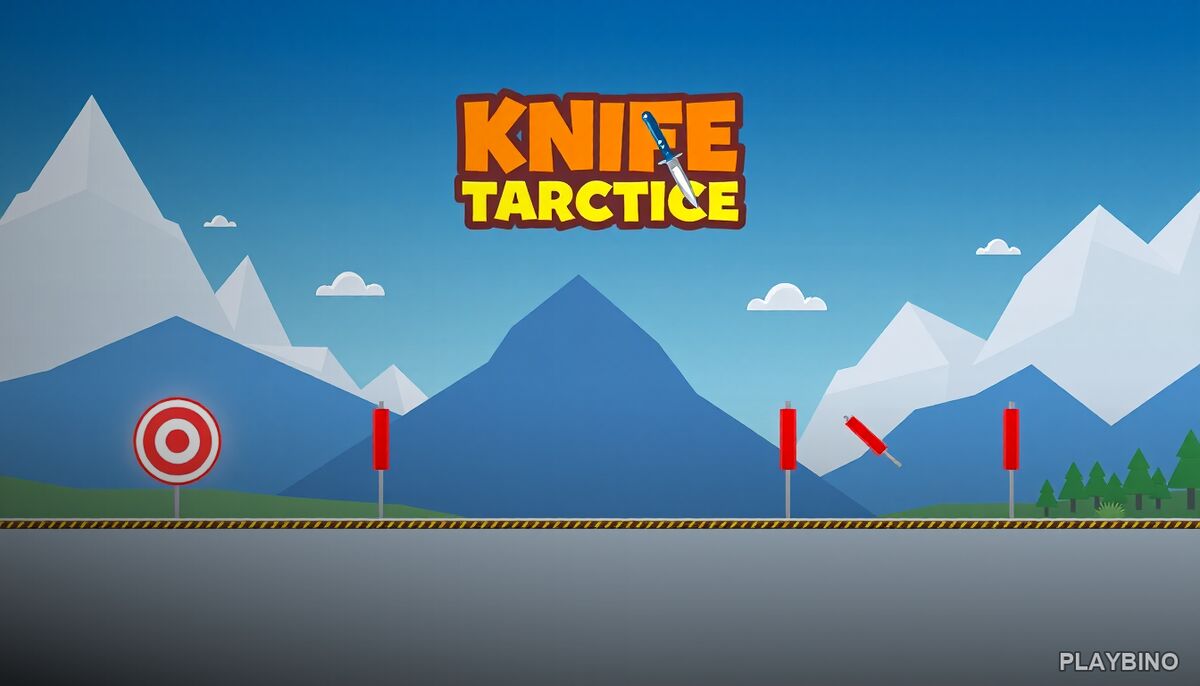
What the Game Is About
Knife Target Practice strips the action down to one core demand: throw at the right moment. Targets spin at varying speeds, and your job is to read that rotation and release your blade at the exact instant it lines up. There is no complex setup, no lengthy tutorial. You pick up the mechanic in seconds, but landing consistent hits across multiple rounds takes genuine focus. Try the full challenge and see how quickly your patience gets tested.
How the Throwing Mechanic Feels
The core loop is tight. Each throw is a single decision: wait or release. The target keeps spinning, the window keeps shifting, and hesitation costs you. Miss the mark and your streak resets. Land the hit and the next throw comes faster, keeping pressure on your timing.
Reading Target Speed
Early rounds move slowly enough that most players can react comfortably. As difficulty climbs, the rotation accelerates and the gap between a clean hit and a miss shrinks. Learning to anticipate the target position rather than reacting to it is the shift that separates average runs from high-scoring ones.
Obstacles and Spacing
Later stages introduce obstacles positioned between the throw point and the target. These are not just visual noise. They force you to account for trajectory and timing simultaneously, adding a second layer of judgment on top of the basic spin-reading challenge.
Scoring and Streak Building
Consecutive successful throws build momentum. The satisfaction of stringing together a clean sequence is the main reward loop here. Each hit feels earned because the margin for error is real. A single mistimed throw can break a long streak, which keeps every round feeling meaningful even when rounds are short.
- Consecutive hits increase score multipliers
- Missed throws break the streak and reset momentum
- Progressive difficulty introduces faster rotations and tighter windows
- Obstacle placement changes the required timing on later stages
Strategy for Longer Runs
Rushing is the most common mistake. The temptation to throw quickly after a successful hit can cause you to release before the target is properly aligned. Slowing your rhythm slightly between throws, especially after a good sequence, gives you a better read on the next rotation cycle.
Focusing on the center of the target rather than the edges also helps. Edge hits may register but they are harder to predict consistently. Aiming for the middle gives you a slightly wider margin and makes your timing more repeatable across different rotation speeds.
Who This Game Suits
This is a single-player skill game that rewards patience over speed. Players who enjoy precision-based arcade challenges, where the mechanic is simple but mastery takes repetition, will find it easy to keep coming back. Quick rounds mean you can play a few attempts in a short break or grind for a high score across a longer session. The difficulty curve is gradual enough that early progress feels natural, but the later stages provide a real ceiling to push against.
Digital Circus Dart follows a similar concept of throw-based accuracy in a browser setting. If that style of challenge appeals to you, that dart-throwing experience is worth a look alongside this one.
Accessibility and Replay Value
One of the strengths of Knife Target Practice on PlayBino is how little friction there is between attempts. No loading screens between rounds, no complicated menus. You miss, you restart, you try again. That low barrier keeps the retry loop fast and the frustration manageable. The progressive difficulty ensures that even players who clear early stages quickly will find the challenge scaling to meet them.
"