Level Up Mutants: Merge Strategy Meets Tower Defense
What Kind of Game Is This?
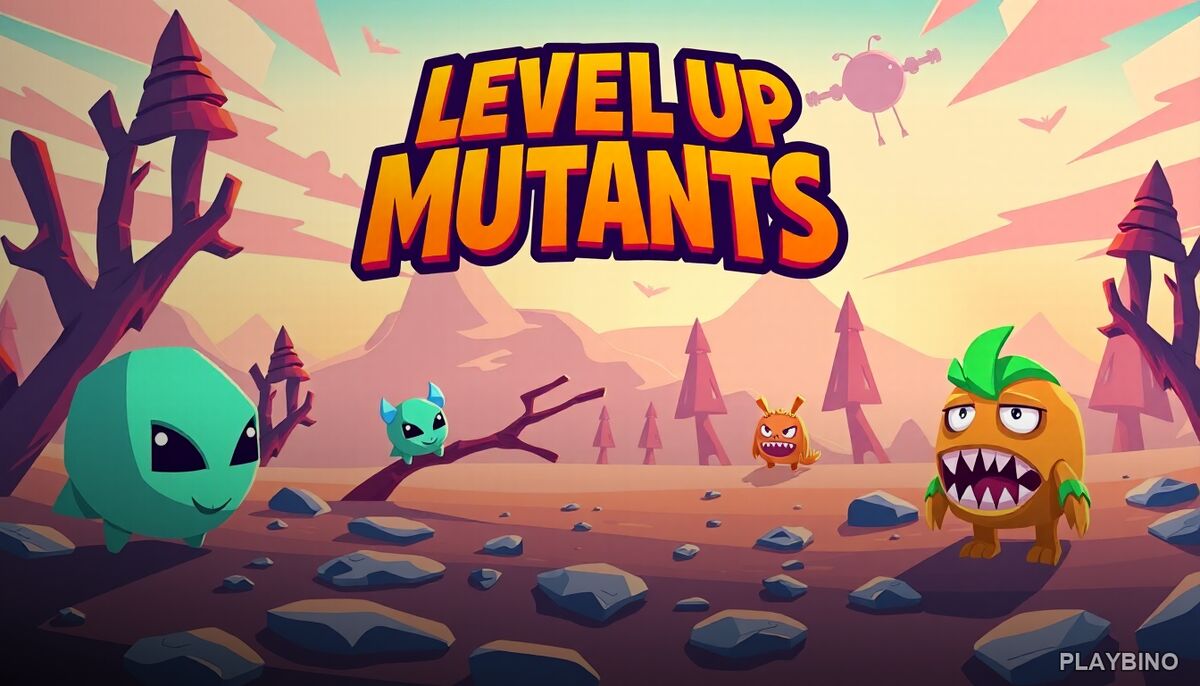
Level Up Mutants sits at the intersection of match-3 puzzle logic and tower defense strategy. You're not just placing units on a grid — you're actively merging identical monsters to evolve them into stronger forms while enemy waves push toward your defenses. The pressure is constant, and every decision about when and where to merge carries real consequences. Play it directly in your browser and the hybrid nature becomes immediately clear: this is faster and more reactive than a typical tower defense, and more spatially demanding than a standard merge puzzle.
The Merging System Explained
The core loop revolves around dragging identical mutants together to create a higher-tier creature. Each successful merge clears space on your battlefield and produces a more powerful unit. That sounds simple, but the execution gets complicated fast.
Chain Reactions
When you merge two creatures and the result happens to sit next to another matching unit, you can trigger a chain. These moments are satisfying and strategically important — a well-set chain can rapidly escalate your defensive power without requiring extra moves. Recognizing when the board is set up for a chain versus when it's just wishful thinking is a skill that develops over several runs.
Space Management
Every slot on your battlefield is precious. Fill it with low-tier mutants and you'll struggle to merge efficiently. Leave too many gaps and your formation weakens. The tension between keeping space open for new spawns and filling it with merged powerhouses is the central puzzle the game keeps throwing at you.
Enemy Waves and Escalating Pressure
The action side of Level Up Mutants comes from the enemy waves. Opponents don't wait for you to feel comfortable — they arrive in increasing numbers and introduce new creature types as the game progresses. Early waves give you room to experiment with merge patterns. Later waves demand that you already have high-tier defenders in position or you'll be overwhelmed before you can catch up.
This escalation is what separates the monster strategy here from a relaxed puzzle. You're always racing the clock of the next wave, which forces faster decisions and punishes hesitation.
Positioning and Formation Strategy
Where you place merged creatures matters as much as what you merge. A powerful high-tier mutant in the wrong position may not cover the lane that needs defending. Thinking about formation layout — not just the next merge — is what separates players who survive deep into the game from those who get overrun mid-session.
- Place high-tier creatures in front-line positions to absorb early enemy contact.
- Keep lower-tier mutants toward the back where they can be merged without disrupting active defenders.
- Avoid clustering identical units too far apart — merging costs time, and distance makes chains harder to trigger.
- Anticipate new creature type introductions by leaving flexible slots near the center of your formation.
Reflexes vs. Planning
One of the more interesting tensions in this game is the balance between reactive speed and deliberate planning. Rushing every merge the moment it becomes available can leave your layout fragmented and hard to recover. But overthinking — sitting on a merge while enemies advance — hands the initiative to the opponent. The game rewards players who can hold both modes simultaneously: fast hands guided by a clear plan.
Merge Monster Attack covers similar territory from a different angle — that merge-based monster challenge is worth exploring if this style of gameplay clicks for you.
Who Will Enjoy Level Up Mutants
If you enjoy action-strategy hybrids where your decisions have immediate visual feedback, this game delivers that consistently. The creature evolution arc gives a sense of progression within each session, and the match-3 foundation keeps the mechanics accessible without making the game feel shallow. PlayBino hosts a range of games in this genre, but the combination of tower defense pressure with merge puzzle logic makes this one feel distinct. Sessions are short enough for a quick break but layered enough to keep you thinking about your next approach.
"