Match Hit: Grid Puzzles With a Countdown Twist
What Match Hit Is About
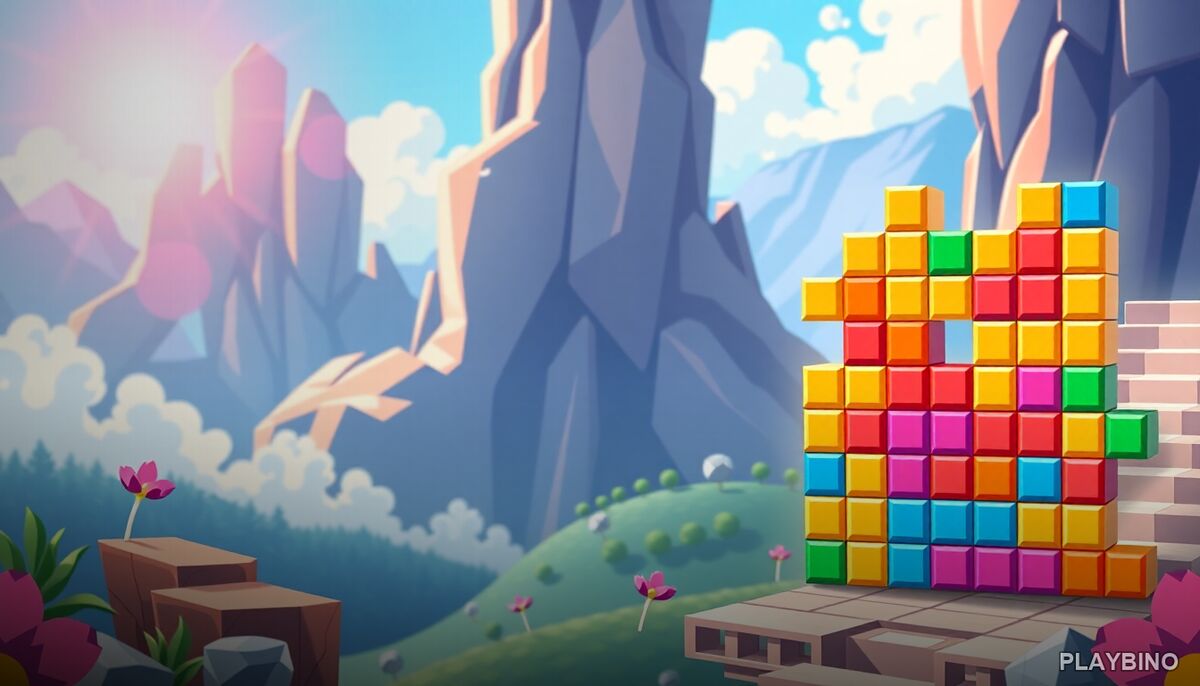
Most match-3 games let you take your time. Match Hit does not. Every level drops you into a grid of colored blocks with a countdown already running, and the pressure is immediate. The goal is to spot matching patterns, clear the field, and do it fast enough before the timer expires. Play it in your browser and the tension kicks in almost immediately, even on the early stages.
The game runs across thirty levels, each one building on the last. Early stages ease you in with straightforward block arrangements, but the difficulty climbs steadily. New block types appear, grid layouts shift, and the time constraints tighten. It is an arcade puzzle experience that rewards observation as much as speed.
How the Matching Mechanics Work
The core loop is simple to grasp: identify matching blocks on the grid and clear them before time runs out. What keeps it interesting is how the arrangements change. Blocks are not always grouped in obvious clusters. Some levels scatter matches across the grid, forcing you to scan quickly rather than fixate on one corner.
Timing and Pressure
The countdown is not just decoration. It actively shapes how you play. Early in a level, you can afford to scan the whole grid. As the timer drops, decisions become more instinctive. That shift from methodical to reactive is where the arcade feel comes through most clearly.
Obstacle Variety
Later levels introduce blocks that behave differently or sit in positions that complicate your usual approach. These additions prevent the game from feeling repetitive and force you to adapt your pattern-reading strategy as you progress.
Level Progression and Difficulty Curve
Thirty levels is a focused run, and Match Hit uses that space well. The difficulty curve does not spike randomly. Instead, complexity builds through a combination of denser grids, faster countdowns, and new block types introduced at measured intervals. Players who clear the first ten levels comfortably will find the middle stretch genuinely challenging, and the final stages demand both accuracy and quick decision-making.
The structure suits short sessions. Each level is self-contained, so picking up and playing for five or ten minutes feels natural. There is no long setup or slow tutorial phase dragging things out.
Strategy That Actually Helps
- Scan the full grid first — Before tapping anything, take a half-second to identify where the clearest matches are clustered.
- Clear edges early — Blocks near the edges of the grid are often easier to isolate, and clearing them opens up the center.
- Prioritize chain setups — If clearing one group of blocks will expose another match, go there first rather than picking isolated pairs.
- Watch for new block types — When a new obstacle appears, pause mentally to understand its behavior before continuing at full speed.
Who This Game Suits
Match Hit fits players who enjoy arcade-style puzzle games where quick observation matters as much as logic. It is not a slow, contemplative puzzle experience. The countdown keeps every level moving, and the satisfaction comes from clearing a complicated grid just before time expires. If you have played other match-3 games and found them too relaxed, the time pressure here changes the dynamic considerably.
Reef Color Challenge on PlayBino takes a different angle on color-based puzzles — that one is worth a look if you want to compare how two games in the same space handle their mechanics differently.
Responsive Feel and Presentation
The controls are straightforward and the game responds cleanly to input, which matters when you are working against a clock. A sluggish or imprecise control scheme would undermine the whole experience, and Match Hit avoids that problem. The colorful block design keeps the grid readable even when arrangements get dense, and the visual feedback on successful matches gives the game a satisfying arcade rhythm that holds up across all thirty levels.
"