MCCraft 2 Player: Cooperative Platforming in a Blocky World
What This Game Is About
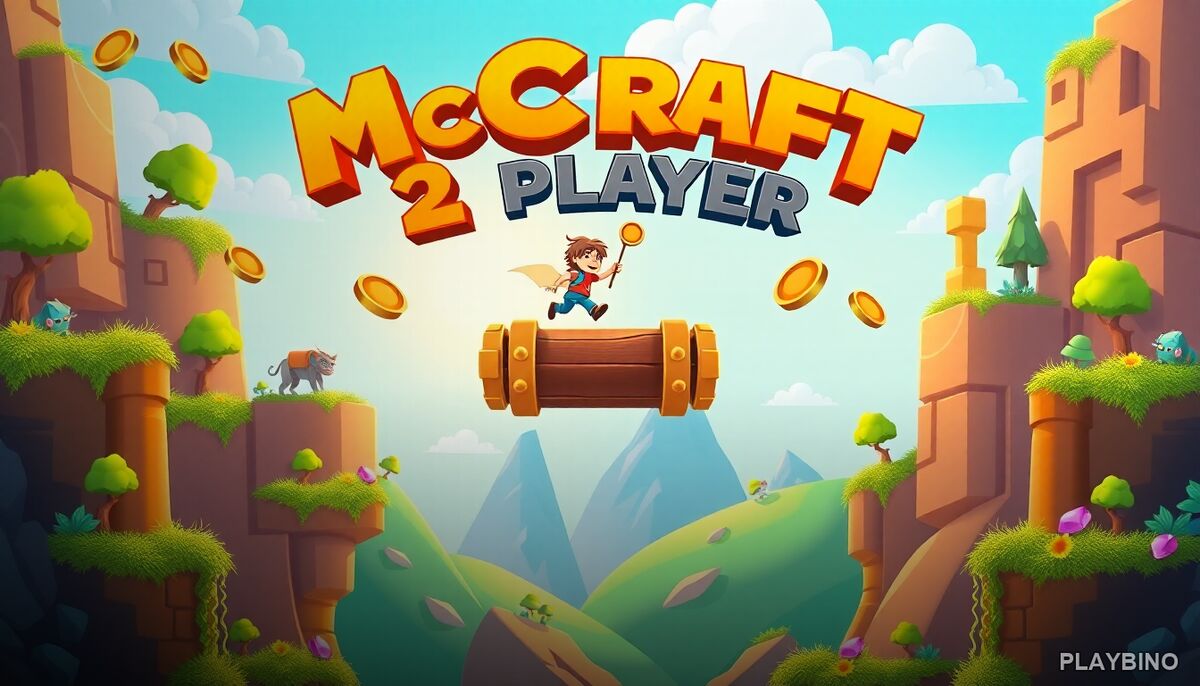
MCCraft 2 Player drops two players into a pixelated world filled with monsters, coins, and treasure chests. The goal is simple on the surface—both characters must reach the exit portal together—but the blocky landscapes quickly reveal layers of coordination and timing that make each stage feel like a shared puzzle. This cooperative browser platformer works best when both players are actively communicating rather than moving independently.
The game sits comfortably at the intersection of action and arcade platforming. Enemies patrol narrow ledges, hazards block key routes, and coins scatter across risky areas that tempt players to explore further than is safe. Every stage has a rhythm to it, and finding that rhythm together is the core appeal.
Controls and Movement
Player Setup
MCCraft 2 Player uses a split-keyboard control scheme. One player typically uses arrow keys while the other uses WASD, allowing both characters to move simultaneously on the same screen. This shared input setup means both players need to be physically present at the same keyboard, which reinforces the cooperative nature of the game.
Defeating Enemies
Combat is handled through stomp mechanics. Jumping directly onto an enemy eliminates it, but walking into one deals damage. Timing a jump from the right height is essential, especially when enemies move unpredictably across platforms. Missing a stomp and landing beside a monster is a common early mistake that punishes impatience.
The Puzzle Side of Each Level
Beyond the action, the terrain itself functions as a puzzle. Gaps that one character can cross alone may require the other to create a path or distract an enemy. Some areas hold coins that are only reachable if one player holds position while the other takes a detour. This division of roles—one clears threats, one collects—emerges naturally from how the levels are designed rather than being forced by explicit rules.
Treasure chests add another layer of incentive. Reaching them often means venturing into areas with denser enemy clusters or trickier platform sequences. Deciding whether the reward is worth the risk is a small but real strategic choice that both players share.
Coordination as the Main Mechanic
The exit portal only activates when both characters are present, which means a faster player cannot simply rush ahead and finish the stage. This design forces constant awareness of where your partner is and what they are dealing with. If one player gets stuck or defeated, the other must wait or backtrack, turning individual mistakes into shared consequences.
- Both players must reach the exit together to complete a stage
- Coins reward exploration of dangerous or off-path areas
- Stomping enemies requires precise vertical timing
- Later levels introduce more complex platform sequences and denser enemy placement
- Environmental hazards add pressure beyond just the monsters
The progression curve is steady. Early stages teach the basics of movement and stomping, while later levels layer in tighter gaps, faster enemies, and more elaborate routes that demand genuine planning rather than improvisation.
Who This Game Suits
MCCraft 2 Player works well for pairs who enjoy arcade-style action without heavy mechanics. The pixel art style and blocky world keep the visual tone light, but the coordination demands can create real tension when a stage goes wrong. Players who enjoy split-screen or shared-screen cooperative games will find the format familiar and satisfying.
If the dual-character dynamic appeals to you, Fire and Water Blockman offers a comparable cooperative challenge with its own elemental twist on two-player puzzle platforming. The games share a focus on teamwork and simultaneous movement through obstacle-filled levels.
Why the Cooperative Format Holds Up
What keeps MCCraft 2 Player engaging across multiple stages is that failure almost always has a clear cause. A mistimed jump, a poorly coordinated route, or one player moving too fast—these are readable mistakes that both players can adjust. That clarity makes it easy to retry a stage without frustration building, which is important for a game built around shared play on PlayBino.