Merge Dices By Numbers: Puzzle Strategy and Scoring Guide
What You're Actually Doing
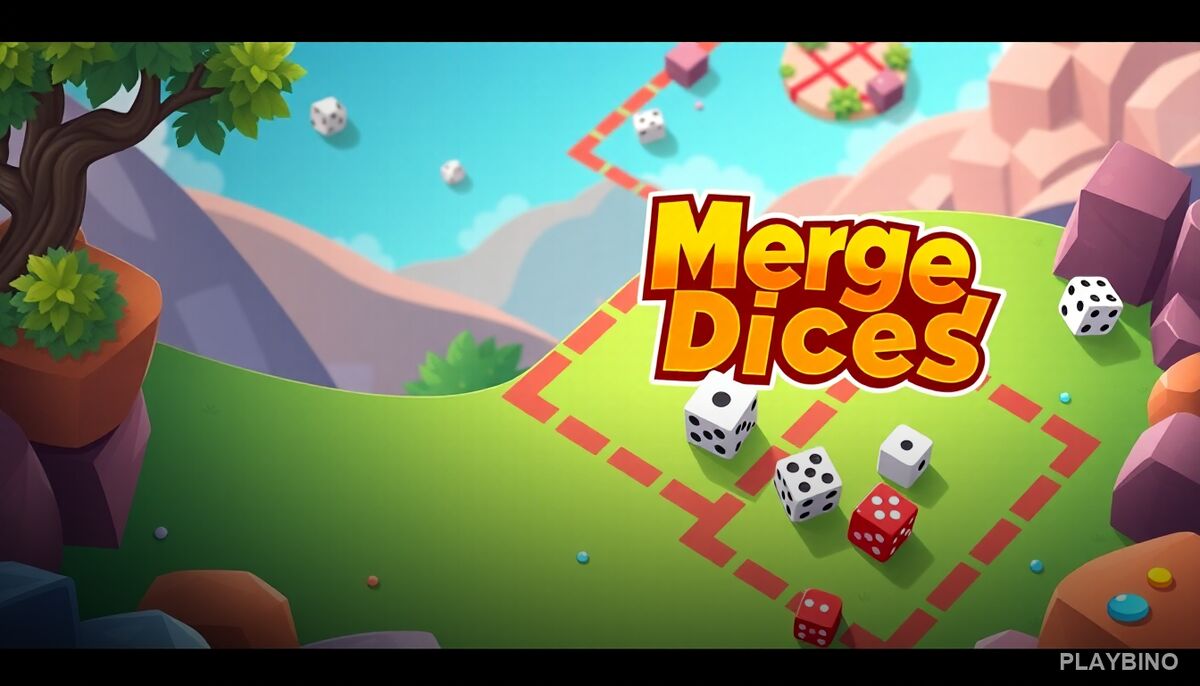
Merge Dices By Numbers puts you in front of a board covered in dice, each showing a number and a color. Your job is to connect three or more dice that share the same number and color. When you do, they collapse into a single die carrying a higher value. That new die can then become part of the next merge, and the chain builds from there. The loop is simple on the surface, but the decisions underneath it are where the real puzzle lives. You can play it directly in your browser without any download or setup.
How the Merging System Works
Every merge does two things at once: it clears space and raises the value of the surviving die. That higher-value die now sits on the board waiting to be matched again with two more of its kind. This creates a progression where early merges feed into larger combinations later, assuming you plan ahead rather than grabbing whatever match appears first.
Matching Logic
Both the number and the color must match for a merge to trigger. This dual condition means the board can look busy with dice that seem close but don't qualify. Scanning for color first, then confirming the number, tends to be faster than the reverse. As new dice drop onto the field, the available matches shift constantly.
Chain Potential
The most satisfying runs happen when one merge immediately sets up another. A freshly merged die lands in a spot where two identical dice already sit, triggering a second merge without any extra input. Spotting these setups before committing to a move separates steady scoring from stalling out mid-session.
Board Management and Priority
The board fills up as the game progresses. New dice arrive regularly, and if you spend too many moves on low-value matches without clearing meaningful space, you run into congestion. The strategic layer here is about deciding which matches to pursue and which to leave alone temporarily.
Prioritizing merges that create high-value dice near clusters of similar dice is usually more effective than clearing isolated pairs just to tidy the board. Leaving a small gap in a dense area can matter more than eliminating a match in an open corner. The puzzle rewards spatial awareness as much as pattern recognition.
Scoring and Progression
Score builds through the value of each merged die rather than simply the count of merges completed. A chain that produces a high-value die contributes more than several small merges spread across the board. This scoring structure encourages patience. Holding off on a merge to position a better chain can pay off more than acting immediately on every available match.
Sessions increase in complexity gradually. Early rounds give you room to experiment, but as the board density rises, the margin for inefficient moves shrinks. Players who enjoy the match-3 format but want more decision weight than a typical grid puzzle will find the strategy layer here genuinely engaging.
What Kind of Player Fits This Game
If you like puzzles that reward observation and forward planning rather than reflexes, this format suits you well. The pace is calm enough to think between moves, but the board state changes fast enough that you can't ignore it for long. It shares DNA with merge-style and match-3 games while adding the number-value progression that gives each session a clear sense of building toward something.
Emoji Merge is another merge-based puzzle that follows a similar pattern-matching structure if you want to compare how different games handle the merge concept. Both titles sit in the same family of logic-focused browser puzzles.
Playing on PlayBino
Merge Dices By Numbers runs entirely in the browser on PlayBino, making it easy to pick up between other tasks. Sessions can be as short or as extended as you want, and the scoring system gives you a concrete target to chase each time you return. The gradual complexity curve means the first few rounds function as a natural tutorial without ever feeling like one.
"