Number Kids: Building Early Math Skills Through Play
What Number Kids Is About
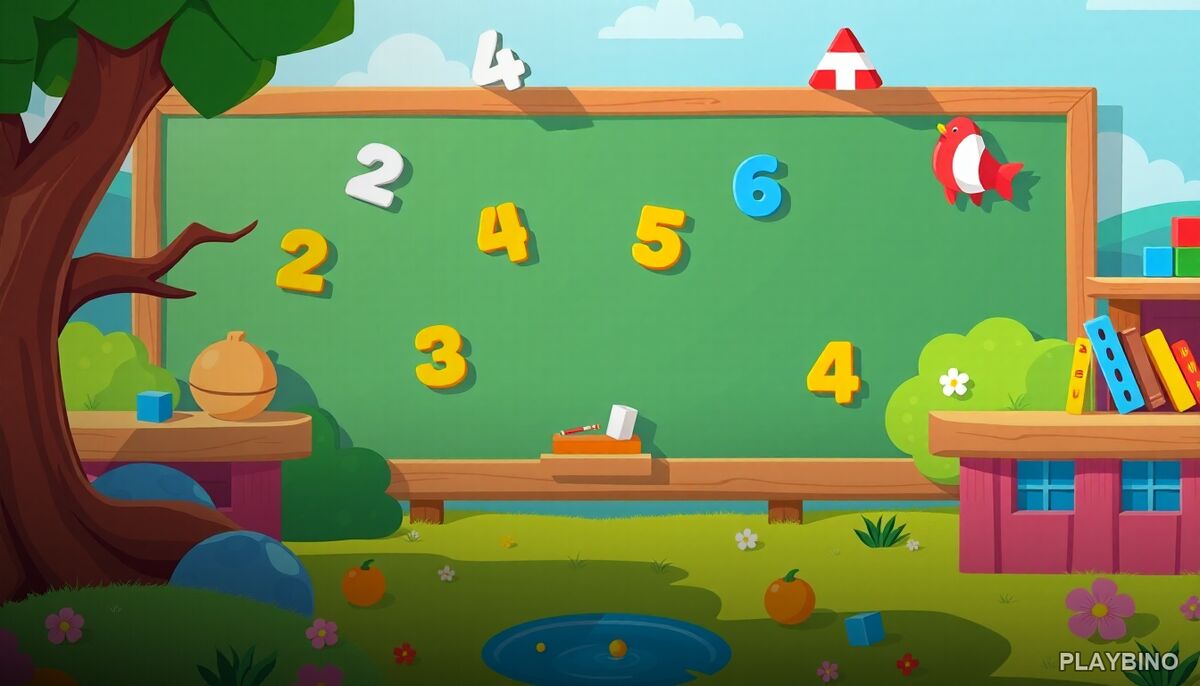
Most early math games either feel too clinical or too chaotic for young learners. Number Kids finds a middle ground, wrapping counting exercises and number recognition into bright, cheerful scenes that keep small children engaged without overwhelming them. The activities are short, varied, and paced to match how preschool and early elementary minds actually work. You can try it directly in your browser without any downloads or setup.
Core Activities and What Children Actually Do
The game presents a range of tasks rather than repeating a single mechanic. Children count groups of objects on screen, match numerals to quantities, arrange numbers in the correct order, and identify which number comes next in a sequence. Each activity type reinforces a different aspect of early numeracy, so a session naturally covers multiple skills without feeling like a worksheet.
Counting and Matching
Some tasks show a set of colorful items and ask the child to tap the correct numeral. Others reverse the challenge, displaying a number and asking the player to select the matching group. This back-and-forth between quantity and symbol is exactly the kind of repetition that builds lasting recognition.
Ordering and Sequencing
Arranging numbers in ascending or descending order adds a light logic layer to the experience. It asks children to think about relationships between numbers rather than just identifying them in isolation, which is a meaningful step forward in early math reasoning.
How the Game Feels to Play
The pace is gentle. There are no countdowns creating anxiety, no harsh failure sounds, and no punishing resets. When a child selects a wrong answer, the feedback is soft and encouraging rather than discouraging. Friendly animated characters react positively to correct answers, which keeps motivation high across multiple short sessions. The visual design uses large, clear fonts and high-contrast colors that are easy for young eyes to read and process.
Why the Puzzle and Brain Design Works for This Age Group
Number Kids is tagged as a puzzle and brain game, and that framing matters. The challenges are not random drills. Each task is a small logic problem: what number matches this group, what comes after seven, which arrangement is correct. Children are making decisions and reasoning through answers, not just pressing buttons. That active engagement is what separates it from passive educational content.
- Counting objects in illustrated scenes
- Matching numerals to quantities and back
- Ordering numbers in sequence
- Identifying missing numbers in a series
- Reinforcement through animated positive feedback
A Comparable Early Learning Experience
World of Alice Quantities covers similar ground from a slightly different angle. That early numeracy challenge focuses on quantity comparison and measurement concepts, making it a natural companion once a child has built confidence with basic counting and number recognition in Number Kids.
Who This Game Suits Best
Number Kids works best for children aged three to seven who are beginning to connect numerals with real quantities. It also fits well as a supplementary activity for early elementary students who need extra practice with sequencing or number order. Parents looking for screen time that has clear educational value will find the balance here reasonable. PlayBino hosts the game in a clean browser environment, so there are no distracting ads interrupting a learning session. The short activity format also means a child can complete a meaningful round in five to ten minutes, which fits naturally into a daily routine without requiring long uninterrupted stretches.