World of Alice Quantities: Counting Practice for Young Learners
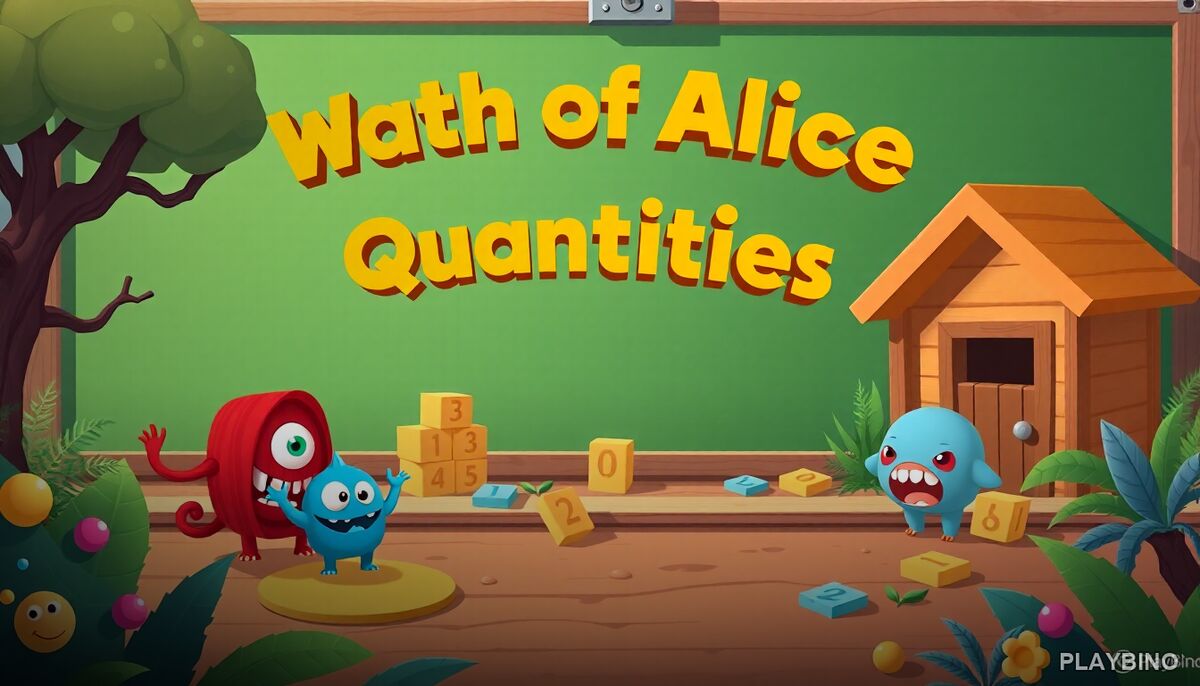
What the Game Is About
Numbers can feel abstract to young children, but World of Alice Quantities turns them into something tangible and visual. The game places colorful creatures and objects on screen and asks players to count them, then match each group to the correct number. It sounds simple, and that simplicity is exactly the point. The logic is clear, the feedback is immediate, and the whimsical setting keeps attention from drifting. You can play it directly in your browser without any downloads or setup.
Core Mechanics and How Counting Works
Each round presents a visual scene filled with grouped items — animals, shapes, or themed objects from Alice's world. The player's job is to count what they see and tap or click the matching number. There's no timer pressure in the early stages, which gives younger children space to count carefully without anxiety.
Matching and Feedback
When a correct answer is selected, the game responds with a positive visual cue and moves to the next scene. Wrong answers don't punish harshly — the game nudges the player to try again. This loop of attempt, feedback, and retry is what makes the repetition feel productive rather than frustrating.
Difficulty Progression
Early levels deal with small quantities that are easy to count at a glance. As players advance, the groups grow larger and the arrangements become less uniform, requiring more careful attention. The jump in difficulty is gradual enough that most children won't notice the challenge increasing until they're already handling larger numbers with confidence.
Visual Design and Engagement
The art style leans into bright, saturated colors and soft character designs that feel welcoming rather than overstimulating. Alice's world provides a consistent theme that ties each scene together, so the game feels like exploration rather than a worksheet. Young players who respond well to visual storytelling will find the setting genuinely engaging.
Brain and Logic Skills Being Practiced
At its core, this is a brain and logic puzzle built around number recognition and one-to-one correspondence — the foundational idea that each object in a group maps to exactly one number. These are skills that early childhood educators actively target because they underpin more complex arithmetic later. The game doesn't teach through instruction; it teaches through doing, which tends to stick better for this age group.
- Counting objects in grouped arrangements
- Matching visual quantities to written numbers
- Building number recognition through repetition
- Developing confidence with progressively larger values
Touchscreen and Desktop Compatibility
The interface was clearly designed with both touchscreens and mouse-based computers in mind. Tap targets are large enough for small fingers, and the layout doesn't rely on precise clicking. Whether a child is on a tablet at home or a school computer, the experience translates well. PlayBino hosts the game in a format that loads quickly across devices, which matters when attention spans are short.
A Similar Challenge Worth Exploring
Children who enjoy this kind of structured, visual logic activity often respond well to sequence-based puzzles too. The World of Alice series extends into pattern recognition, and another game in the same universe focuses on completing star sequences — a natural next step once number recognition feels comfortable. It builds on similar skills while introducing a different type of logical thinking.