Octopus Legs: Underwater Puzzle Platformer Guide
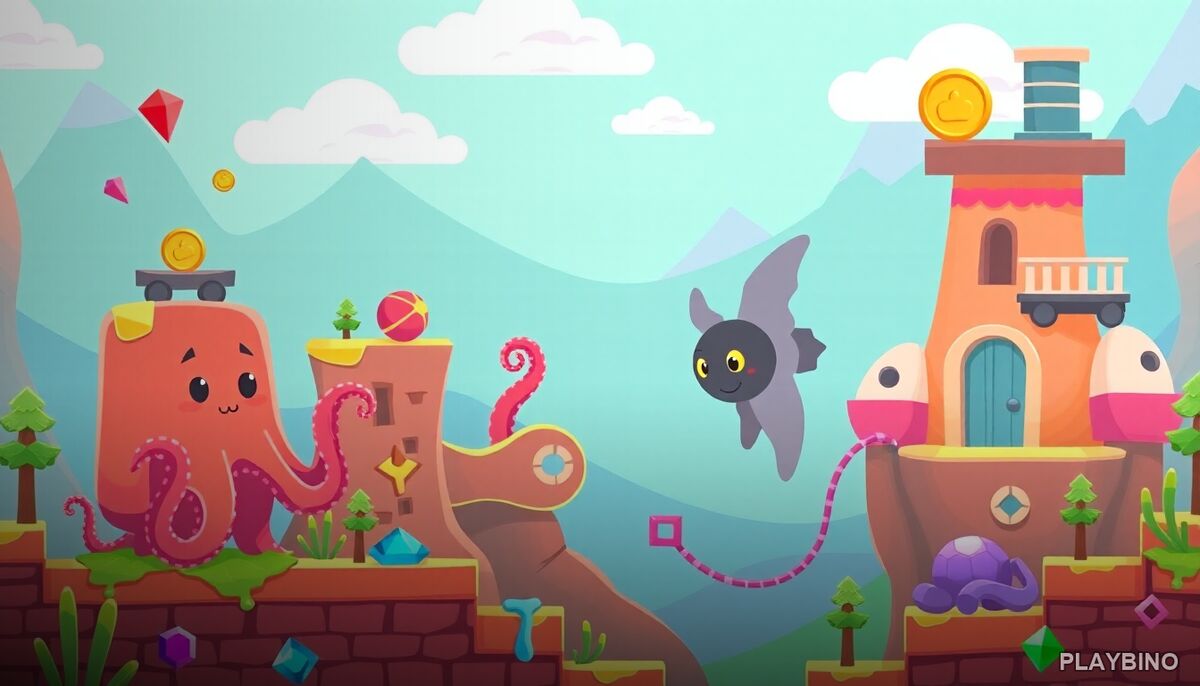
What You're Actually Doing
Each level in Octopus Legs presents a simple premise with real depth: an octopus has lost its tentacles, and they're scattered across a series of underwater platforms, obstacles, and mechanical contraptions. Your job is to navigate the environment, collect every limb, and complete the reassembly. Play it in your browser and the first few levels ease you in gently, but the puzzle logic compounds quickly as new hazards stack on top of each other.
This is a one-player skill and puzzle game that rewards observation over speed. Before moving, it pays to study the layout. Where are the tentacles? What's rotating? What's timed? Answering those questions before acting is often the difference between a clean run and a reset.
The Mechanical Layer
The ocean floor isn't just a backdrop. It's filled with devices that actively shape your route through each stage.
Rotating Platforms
Some platforms spin continuously, meaning your window to land or cross them is narrow. Mistiming a jump here sends you back to the start of the level. The rotation speed varies, so early stages teach you to read the rhythm before committing.
Moving Barriers
Barriers slide horizontally or vertically across paths, blocking access to tentacles until the gap opens. These create natural waiting points in the level design, and rushing past them rarely works. The game is essentially asking you to synchronize your movement with the environment rather than fight against it.
Timed Mechanisms
Some devices activate on a cycle. A platform may only be solid for a brief window, or a passage may close after a few seconds. These timed elements push the puzzle complexity further in later stages, where multiple mechanisms run simultaneously and your route planning has to account for all of them at once.
Collection Logic and Route Planning
Not every tentacle is equally accessible. Some are placed behind barriers that only open after you've triggered something elsewhere. Others sit on platforms that require precise timing to reach without falling. The order in which you collect tentacles often matters, and choosing a poor sequence can lock you out of an efficient path.
Later levels layer several hazards together, meaning a route that works for the first three tentacles might leave you stranded for the fourth. Mentally mapping the full level before moving is a habit worth building early. The puzzle design rewards players who treat each stage as a logic problem first and a reflex challenge second.
Difficulty Curve and Satisfaction
The early stages function as a tutorial without labeling themselves as one. Controls feel straightforward, and the first few mechanical elements appear in isolation so you can understand each one before they combine. By the mid-game, rotating platforms and timed barriers appear in the same level, and the challenge shifts from individual mechanics to managing multiple moving parts simultaneously.
Completing a tricky level, especially one where you've failed several times on the final tentacle, delivers a clean sense of accomplishment. The cheerful ocean visuals keep the tone light even when the puzzle logic gets demanding, which helps maintain momentum through the harder stages.
Who This Game Suits
- Players who enjoy puzzle-platformers where timing and planning matter equally
- Anyone who likes single-player skill games with a clear objective per level
- Casual players looking for a challenge that doesn't require fast reflexes alone
- Puzzle fans who prefer spatial reasoning over abstract logic
The Piggy Bank game on PlayBino takes a different approach to collection-based puzzles, and that browser challenge is worth a look if you enjoy games built around gathering objects under constraints.
Strategy Worth Keeping in Mind
Patience is the most useful tool in Octopus Legs. Rushing through a level almost always results in a failed run. Instead, pause at each new section, identify what's moving and on what cycle, then plan your path to the nearest tentacle before moving. Once you've collected one, reassess rather than immediately chasing the next one.
On levels with multiple timed mechanisms, try to identify a natural waiting spot near the center of the stage. From there, you can react to whichever path opens first rather than committing to a fixed sequence that may not survive contact with the actual timing of the obstacles.