Pixelia: Seasonal Platforming With Traps, Coins, and Precise Movement
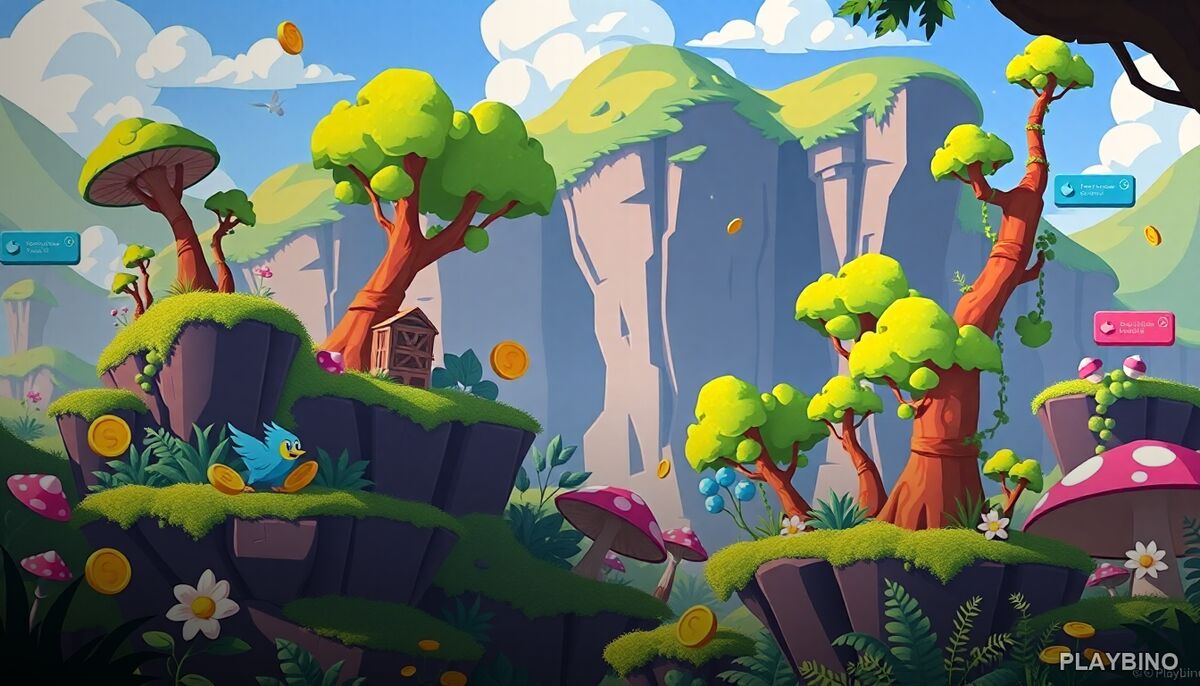
What Kind of Game Is Pixelia?
Pixelia is a single-player action arcade platformer built around movement, timing, and survival across vibrant seasonal environments. Each level asks you to navigate a distinct landscape — from enchanted mushroom forests to icy terrain — while collecting gold coins, dodging traps, and dealing with patrolling enemies. The game rewards players who pay attention to how each environment behaves rather than just rushing through stages.
If you want to jump straight in, the browser version on PlayBino loads instantly with no installation needed.
The Three Seasonal Worlds
The structure of Pixelia revolves around three distinct seasonal environments, each introducing new terrain rules and visual personality. This isn't just a cosmetic change — the season directly affects how you move and what threatens you.
Forest and Mushroom Zones
The early forest stages feel exploratory. Mushroom platforms and winding pathways encourage you to look for coins tucked into corners while staying alert to traps hidden along the route. Enemy patrol patterns here tend to be predictable, which gives you time to read the level before committing to a path.
Icy Surfaces and Winter Hazards
Winter stages shift the challenge significantly. Icy surfaces reduce traction, meaning momentum carries you further than expected. A jump that works perfectly on solid ground can send you sliding into a hazard on ice. Adjusting your movement rhythm for slippery terrain is one of the more satisfying mechanical puzzles the game offers.
Enemies and Obstacle Logic
Enemies in Pixelia patrol fixed routes across the landscapes. Learning their timing is more important than reacting to them on the fly. Most encounters become manageable once you observe a patrol cycle for a few seconds before moving. The game doesn't rely on fast-twitch combat — it leans toward strategic positioning and patient movement.
Environmental hazards operate on similar logic. Traps are placed to punish careless movement rather than to surprise you unfairly. The level design generally telegraphs danger through visual cues, so attentive players will spot most threats before they become a problem.
Coin Collection and Progression
Gold coins are scattered throughout each stage, and gathering them adds a secondary layer of engagement beyond simple survival. Some coins are placed in straightforward locations, while others require detours that carry additional risk. Deciding whether a coin is worth the route change becomes a small but real strategic decision as levels grow more complex.
- Coins are distributed across all three seasonal worlds
- Some placements require timing around enemy patrol gaps
- Detour routes often carry higher hazard density
- Collecting coins encourages full exploration of each stage
Movement and Timing Feel
The core feel of Pixelia is built on precise platforming. Jumps need to be deliberate, and the game doesn't offer much forgiveness for mistimed inputs near hazards or platform edges. This makes early levels feel like a tutorial in patience before the difficulty ramps up in later stages. Players who enjoy arcade platformers where muscle memory develops naturally over repeated attempts will find the progression satisfying.
Journey of Carter follows a similar philosophy of level-by-level arcade platforming — that game's breakdown covers how its mechanics compare if you want another single-player challenge in the same genre.
Who This Game Suits
Pixelia works well for players who enjoy arcade-style action with a clear sense of progression. The seasonal structure keeps the visual experience fresh, and the increasing difficulty means there's always a new layer of challenge to work through. It doesn't demand long sessions — individual levels are short enough to fit into brief play windows, making it a natural pick for casual arcade runs without a long time commitment.