Puppetman: Ragdoll Puzzle – Physics Logic That Rewards Patience
What Kind of Game Is This?
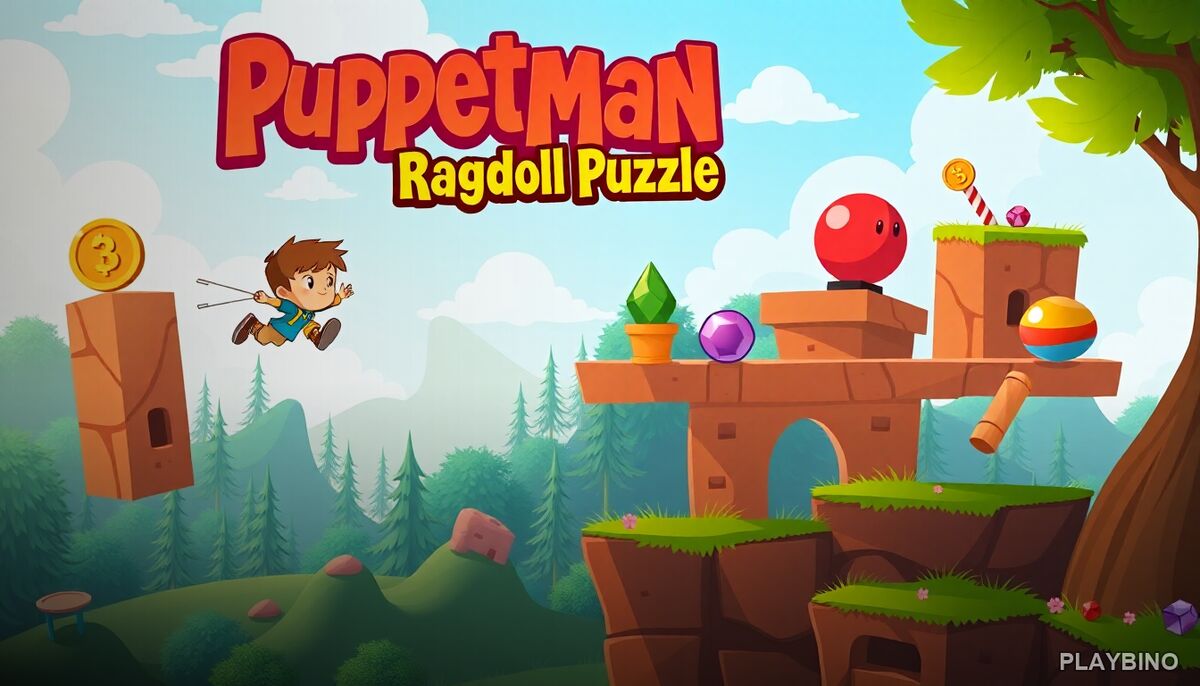
Puppetman: Ragdoll Puzzle sits at the intersection of logic puzzles and physics simulation. The core idea is deceptively simple: guide a floppy, ragdoll character downward through a level without letting it crash. But the environments are filled with swinging arms, rotating platforms, breakable objects, and barriers that all respond to your input in real time. Every level becomes a small physics experiment.
The game rewards careful observation more than quick reflexes. Before tapping anything, it pays to watch how the objects are positioned and imagine how each one might redirect your character's fall. Try the full challenge in your browser and you'll quickly realize that impulse clicks lead to crashes, while deliberate timing leads to clean landings.
The Ragdoll Physics System
The ragdoll physics engine is what makes this game feel distinct from standard puzzle titles. Your character doesn't move with precision — it flops, swings, and tumbles in ways that feel both realistic and slightly comedic. A limb might catch on a platform edge and spin the body sideways. A poorly timed tap might send the character bouncing off a wall at an unexpected angle.
This unpredictability is intentional. It creates tension on every attempt and adds humor when things go wrong. The physics engine responds consistently to each interaction, so failed attempts still teach you something useful about how momentum and object weight interact in that specific level.
Object Types and Their Roles
Each level introduces different interactive elements. Some objects slow the fall when touched, acting like cushions or brakes. Others redirect momentum entirely — a rotating arm might fling your character sideways into a safer zone or straight into a wall, depending on when you activate it. Breakable objects add another layer, since removing a barrier too early or too late changes the entire path.
Timing and Sequence Logic
The skill element in this puzzle game comes down to sequencing. You're not just clicking objects — you're deciding the order and timing of each interaction to build a controlled descent. Activate a swing too early and the character misses it entirely. Wait too long and the landing zone has shifted.
Planning Before Acting
A useful approach is to mentally map the path before touching anything. Identify which objects are essential to the safe route and which are distractions or hazards. Some levels have multiple valid solutions, while others have a single precise sequence that works. Recognizing which type of level you're on shapes how you approach it.
Recovering from Bad Momentum
Sometimes a fall starts going wrong mid-level. Rather than restarting immediately, it's worth watching whether a later object might still correct the trajectory. The physics system occasionally produces unexpected recoveries, and learning to read momentum mid-fall is a skill that develops over multiple attempts.
Level Progression and Complexity
Early levels introduce one or two interactive objects and give you room to experiment. As the game progresses, the environments grow more layered — more objects, tighter timing windows, and less margin for error on each tap. The difficulty curve feels gradual enough that new mechanics have time to become familiar before the game demands precise execution with them.
The visual design keeps each level readable. Objects are clearly distinct from background elements, which matters when you're making split-second decisions about what to activate. The aesthetic leans playful, matching the humor of watching a ragdoll tumble through increasingly elaborate contraptions.
Who This Game Suits
- Players who enjoy logic puzzles with a physical, tactile feel
- Anyone who likes experimenting with cause-and-effect mechanics
- People looking for a short-session browser game that still requires genuine thought
- Fans of skill-based puzzles where timing matters as much as strategy
Weighted Seesaw offers a comparable physics-based challenge if the balance and object-interaction style here appeals to you — it approaches similar logic from a different angle.
Why the Physics Puzzle Format Works Here
What keeps Puppetman: Ragdoll Puzzle engaging across multiple levels is that the physics system never feels arbitrary. When something goes wrong, there's usually a clear reason — a tap came too early, an object was ignored, or the sequence was reversed. That cause-and-effect clarity makes each failure informative rather than frustrating, and each success feel genuinely earned through planning and precise execution rather than luck.