Retro Running Boxes: Endless Runner for 1 and 2 Players
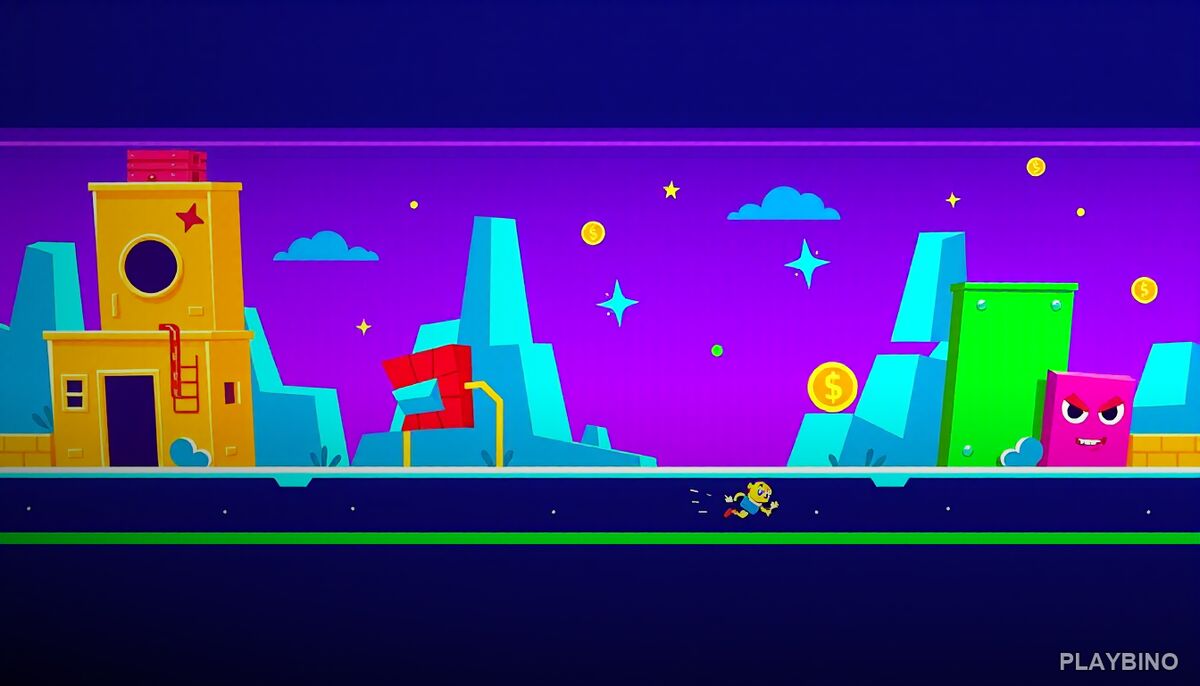
What Kind of Game Is This?
Retro Running Boxes drops you into a blocky pixel world where the ground is never guaranteed. Platforms vanish, gaps stretch wider, and hazards pop up mid-run with little warning. The whole thing moves faster as you progress, which turns a simple left-to-right run into something that demands real attention. Try the full run and you'll notice immediately that the minimalist visual style isn't just aesthetic — it removes clutter so your eyes stay locked on what matters: the next obstacle.
Solo Mode vs Two-Player Mode
The game offers two distinct ways to play, and they genuinely feel different from each other.
Playing Alone
In single-player, the goal is distance. You're chasing patterns, memorizing where hazards tend to cluster, and pushing your reaction time further each attempt. The endless runner format means there's no finish line — just a personal record to beat. Runs feel short at first, but as speed ramps up and obstacle combinations get more unpredictable, even experienced players will find themselves restarting more than expected.
Two-Player Competition
The two-player mode completely changes the dynamic. Suddenly it's not about distance — it's about outlasting the person next to you. One mistimed jump, one missed gap, and the race is over. This competitive layer adds pressure that solo runs simply can't replicate. It works well for quick sessions where both players want a fast, decisive match.
The Core Mechanics
Controls are minimal by design. You jump, you time your landings, and you react to what appears on screen. The challenge isn't complexity — it's execution under speed. As the run progresses, the game layers obstacles in ways that punish autopilot play. Platforms that seemed safe become traps. Gaps that looked jumpable close faster than expected.
- Timing-based jumps over widening gaps
- Disappearing platforms that require quick decisions
- Speed increases that compress reaction windows
- Obstacle combinations that break familiar patterns
- Competitive two-player racing on the same course
Pattern Recognition and Reflexes
What separates casual runs from long ones is pattern recognition. The game reuses obstacle structures with variations, so players who pay attention start to anticipate rather than just react. This is where the depth hides. On the surface it looks like a reflex game, and it is — but the further you go, the more your brain starts reading sequences rather than individual jumps. That shift from pure reaction to partial prediction is what creates the one-more-try loop that defines the endless runner genre.
Yes or No Challenge Run takes a different approach to this kind of quick-decision gameplay — that browser challenge is worth a look if split-second choices are what you enjoy most.
Who This Game Suits
Retro Running Boxes works well for players who want short, replayable sessions without setup or progression systems to manage. There's no currency, no upgrades, no unlocks — just the run. That simplicity is a feature. It also makes the two-player mode immediately accessible, since both players start on equal footing every time. The pixel art style keeps the game lightweight and fast-loading, which fits the pick-up-and-play nature of browser gaming on PlayBino.
Getting Further Each Run
A few habits help extend your distance consistently:
- Watch the ground ahead, not your character — anticipation beats reaction at higher speeds
- Stay near the center of platforms when possible to give yourself more room for the next jump
- In two-player mode, focus on your own lane rather than watching your opponent
- Accept early restarts as learning — the obstacle patterns repeat with variations, so each run teaches you something
The game doesn't hand out second chances. A single mistimed jump ends the run. That strictness is exactly what makes longer runs feel earned rather than lucky.