Yes or No Challenge Run: Gates, Decisions, and Endless Arcade Fun
What Kind of Game Is This?
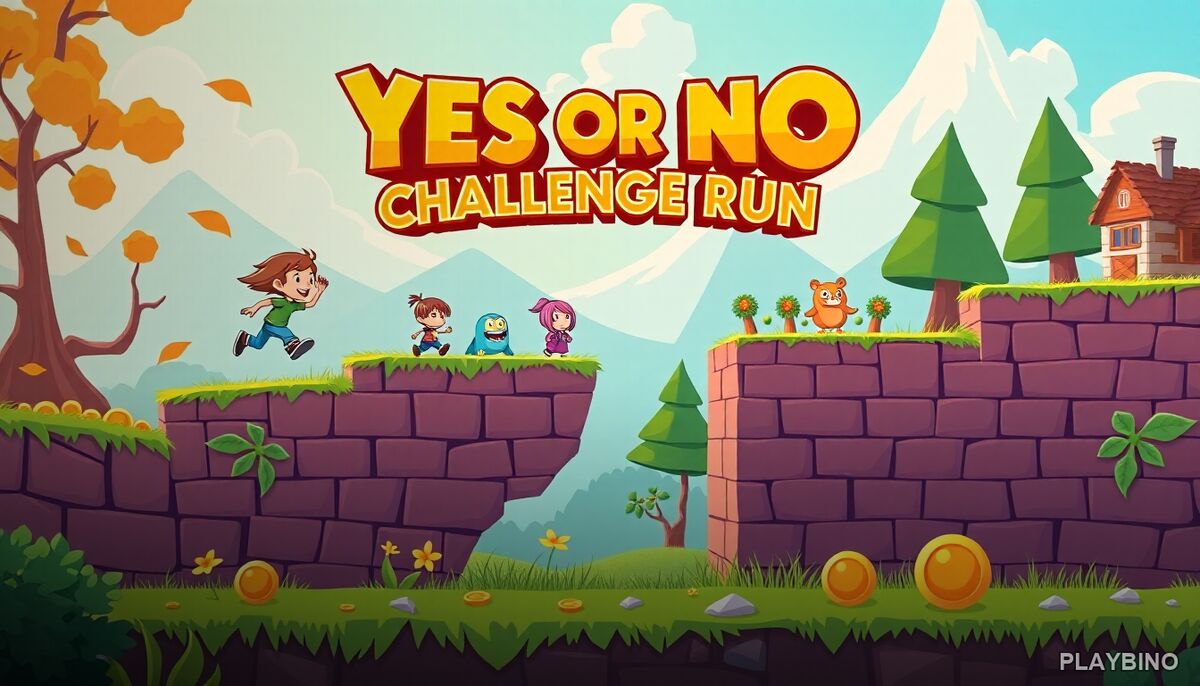
Most endless runners ask you to jump and dodge. Yes or No Challenge Run adds a twist: every gate you pass through carries a yes-or-no question, and your answer changes what happens next. Scores shift, collectibles appear or vanish, and the run takes a different shape depending on the choices you make. Try the full run and see how quickly the decisions start to stack up.
The result is an arcade platformer where reflexes matter, but so does reading each gate before you reach it. The binary choice system sounds simple, but when you're sprinting through a colorful obstacle course, those split-second calls carry real weight.
How the Decision System Works
Each gate presents a question with a yes lane and a no lane. Choosing correctly — or strategically — unlocks better collectibles, boosts your score multiplier, or opens new paths through the course. Wrong answers aren't always punishing; sometimes they just redirect you into a harder stretch of obstacles.
Scoring and Collectibles
Collectibles scattered across the course are tied directly to your gate choices. Some questions gate off entire reward clusters, so players who pay attention to patterns will pull ahead over time. The scoring system rewards consistency rather than just speed, which gives the game a light strategic layer on top of its arcade energy.
Companion Pets and Machines
Companion pets and helpful machines join your run as support elements. They don't just decorate the screen — they interact with the course in ways that can cushion a bad decision or amplify a good one. Learning what each companion does adds another dimension to how you plan your route through each level.
Two-Player Mode
The 2-player mode is where the game gets genuinely chaotic. Both players race the same course simultaneously, each hitting gates and answering questions independently. When one player picks yes and the other picks no, the outcomes diverge in real time. Coordinating answers or deliberately splitting to cover more reward territory becomes its own mini-strategy within the run.
It works well as a local couch experience. The shared screen keeps both players accountable, and the competitive edge of watching someone else's score tick up is a solid motivator to focus on your own gate reads.
Obstacle Course Design
The courses are visually vibrant with varied obstacle layouts that change the rhythm of each run. Some sections demand careful timing around moving platforms, while others push you to commit to a gate choice faster than feels comfortable. The endless runner structure means the difficulty scales as you progress, introducing tighter gaps and quicker gate sequences.
Save Water Race — another arcade runner with its own momentum — takes a different approach to the genre, but players who enjoy this style of quick-reflex course navigation will find that one worth a look too.
Who Plays This Well
- Players who like arcade runners but want more interactivity than pure dodging
- Anyone looking for a quick two-player game that doesn't require complex controls
- Casual players who enjoy light decision-making with visible, immediate consequences
- Competitive friends who want to race the same course and compare outcomes
Practical Tips for Better Runs
Read the gate question early. The closer you get before deciding, the more likely you are to mis-tap under pressure. Try to identify which question types consistently lead to higher collectible clusters and prioritize those lanes when the scoring window is open.
In two-player mode, agree beforehand whether you're going to mirror each other's choices or split them. Splitting covers more reward territory but makes coordinating companion bonuses harder. Mirroring keeps both players in sync but limits your collective range of outcomes.
PlayBino hosts the game directly in the browser, so there's no install friction — you can jump into a run, finish it in a few minutes, and come back for another without any barrier. That low-commitment loop is part of what makes the format work.