Road Race 3D: Tracks, Reflexes, and Random Vehicles
What Kind of Racing Game Is This?
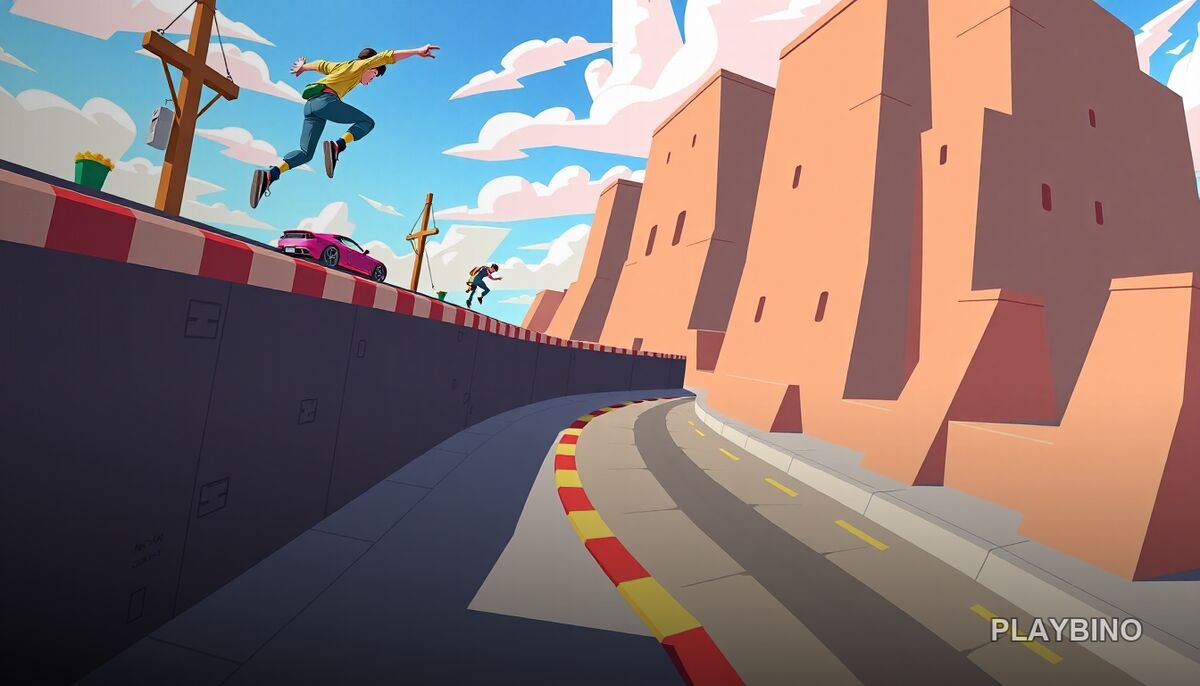
Most arcade racers ask you to go fast and steer cleanly. Road Race 3D adds a layer on top of that: the vehicle under you can change mid-race, the terrain shifts without warning, and the tracks are built with elevation changes and tight corners that punish overconfidence. It sits firmly in the action-arcade space, but the parkour-inspired movement across winding 3D layouts gives it a different texture than a standard racing title. If you want to try the full run on PlayBino, the challenge becomes clear within the first lap.
The Random Vehicle System
The most unusual mechanic here is the mid-race vehicle swap. Vehicles change randomly during competition, which means the handling profile you started with may not be the one you finish with. Some vehicles carry strong straight-line speed but slide wide on corners. Others grip tightly but feel sluggish on open stretches.
This forces a constant recalibration. You cannot commit to a single driving style and stick with it. Instead, each vehicle swap is a small reset that demands you read the upcoming track section and adjust your approach immediately. Aggressive driving that worked thirty seconds ago may be exactly the wrong call after a swap.
Adapting on the Fly
The key is recognizing what the current vehicle does well and matching that to the terrain ahead. If you have a corner-gripping vehicle approaching a tight section, push hard. If you have a speed-focused vehicle on the same section, back off slightly and use the straights to recover time. The game rewards players who stay observant rather than those who simply hold the accelerator down.
Track Design and Spatial Judgment
The 3D tracks are not flat circuits. Elevated paths, sudden drops, and winding routes mean that spatial awareness matters as much as raw reaction speed. Tight turns appear after fast straights, which creates a rhythm of acceleration and restraint. Hazards are placed to punish players who are not scanning ahead.
Each lap builds familiarity with the layout, but the random vehicle changes keep the experience from becoming purely mechanical. Even a track you know well presents new problems when your vehicle handling shifts unexpectedly.
Hazards and Concentration
The hazards are not decorative. Obstacles and terrain shifts require instant reactions, and the game does not slow down to let you recover mentally. Concentration needs to stay high throughout each lap, not just during obvious danger zones. A brief lapse on what looks like a safe section is often where races are lost.
Risk Assessment as a Core Skill
Road Race 3D is genuinely an action-arcade game, but the decisions that matter most are not about reflexes alone. Knowing when to push hard and when to play conservatively is the skill that separates consistent finishes from crashes. The complexity increases as races progress, and the margin for error shrinks accordingly.
- Straight sections: use speed-focused vehicles aggressively
- Tight corners: prioritize grip and reduce entry speed
- Elevated paths: stay centered and avoid late corrections
- Post-vehicle swap: take one beat to assess the new handling before committing
Who This Game Suits
Players who enjoy racing games with an unpredictable edge will find this more engaging than a straightforward circuit racer. The arcade feel keeps sessions short and replayable, while the vehicle randomness and track complexity add enough depth to make improvement feel meaningful. It is not a simulation, and it does not try to be. The fun comes from the chaos of adapting quickly and the satisfaction of a clean lap despite the variables working against you.
If this style of fast-reaction driving appeals to you, another driving-focused challenge worth exploring is Wheel Racer, which takes a different angle on browser-based racing mechanics.