Rolly Bouncer: Physics, Timing, and Controlled Chaos
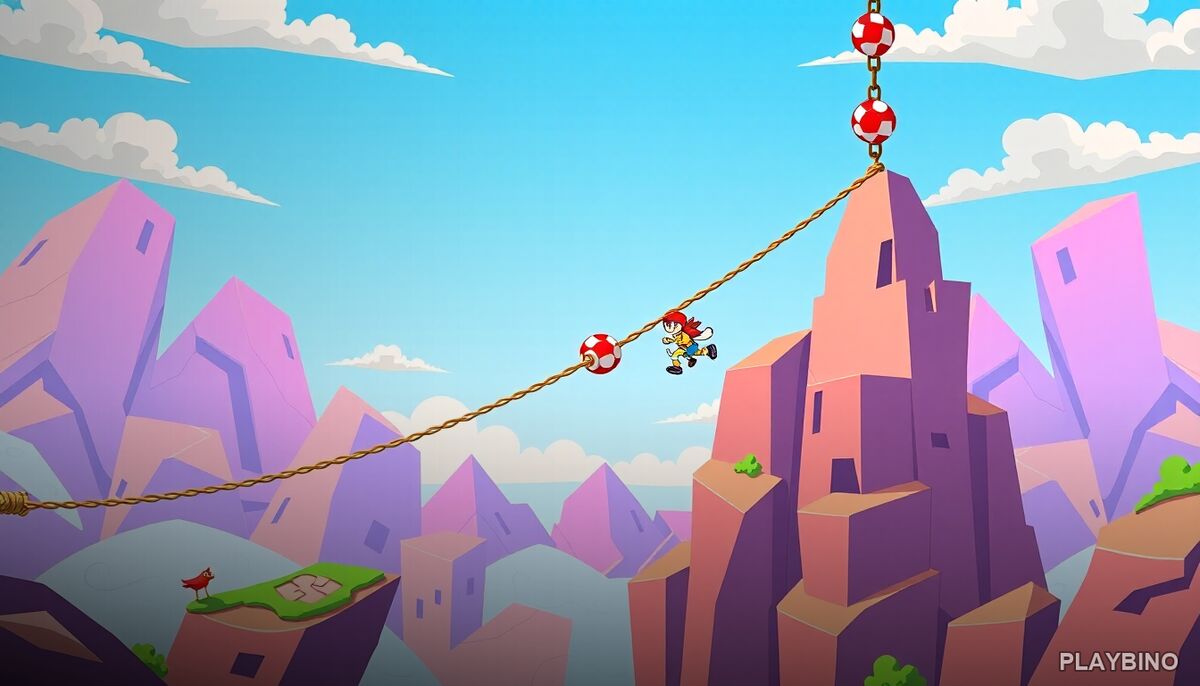
What Kind of Game Is This?
Rolly Bouncer sits at the intersection of arcade reflex and puzzle thinking. You control a sphere that never stops moving — it bounces continuously, and your job is to guide it through platforms, gaps, and hazards without losing control. The physics engine gives the movement a natural rhythm, so the game never feels purely random. Every surface, angle, and drop has a predictable outcome if you read it correctly.
The concept is simple on paper, but the execution demands real spatial awareness. You are not just reacting — you are reading the terrain ahead and planning where the next bounce will land. Try it in your browser and you will notice quickly that the learning curve is gentle at first, then sharpens as the level design introduces more complex layouts.
Movement and Physics Feel
The bouncing mechanic is the core of everything. The sphere maintains momentum between surfaces, which means a mistimed jump or a poorly read platform edge can send you off course fast. The physics-based movement creates a rhythm — once you find it, navigation starts to feel almost musical. You anticipate the arc, adjust your approach angle, and commit.
Timing the Bounce
Timing is not about speed. It is about patience. Some sections reward players who let the ball settle into a natural bounce cycle before moving forward. Rushing through gaps before the rhythm is established usually ends badly. The game rewards players who pause mentally, even while the ball keeps moving physically.
Reading Terrain Ahead
Each stage has multiple routes, and some are clearly harder than others. Spotting the safer path early — before you are already mid-bounce — is a skill that develops over several attempts. The visual feedback helps: colors shift as you move, giving subtle cues about momentum and position.
Hazards and Obstacles
As levels progress, the obstacle variety increases meaningfully. Early stages introduce basic gaps and fixed platforms. Later sections layer in moving platforms, narrow ledges, and environmental hazards that change the timing window for each bounce. Some hazards require you to adjust your approach entirely rather than just react faster.
- Moving platforms that shift the landing zone mid-bounce
- Narrow gaps that punish even slight mistiming
- Environmental hazards that force route changes
- Sections that alternate between fast reaction and careful planning
The difficulty curve feels deliberate. New elements are introduced one at a time, giving you space to understand each mechanic before it gets combined with others.
Power-Ups and Collectibles
Scattered across stages are power-ups that temporarily change what the ball can do. These are not just bonuses — in some sections, they are the key to getting through a tricky stretch at all. A power-up might extend your air time, change your bounce height, or offer brief protection from a hazard. Knowing when to grab one and when to skip it for a better route is part of the strategic layer.
Optional collectibles add replay value for players who want extra challenge beyond just clearing a stage. Collecting everything usually means taking the harder path, which requires a much tighter command of the physics.
Who Plays This Well
Players who enjoy arcade games with a puzzle layer tend to connect with Rolly Bouncer quickly. The action is constant, but the thinking never stops. If you like games where physical skill and route planning matter equally, the format works well. It also suits short sessions — each level is compact enough to attempt multiple times without feeling like a grind.
The Fall Boys 2D Parkour game on PlayBino shares some of that same platform-navigation energy — that arcade platformer is worth a look if the movement-based challenge here clicks for you.
Stage Design and Replayability
The multiple routes through each stage give Rolly Bouncer genuine replayability. A first clear might use the safest path. A second run might chase collectibles along a riskier line. A third might focus on clean execution with no mistakes. The stage design supports all three approaches without forcing any of them, which keeps the game from feeling one-dimensional even after you understand the mechanics.
"