Seven Card Game: Strategy, Patience, and Poker Logic in Your Browser
What Seven Card Game Is About
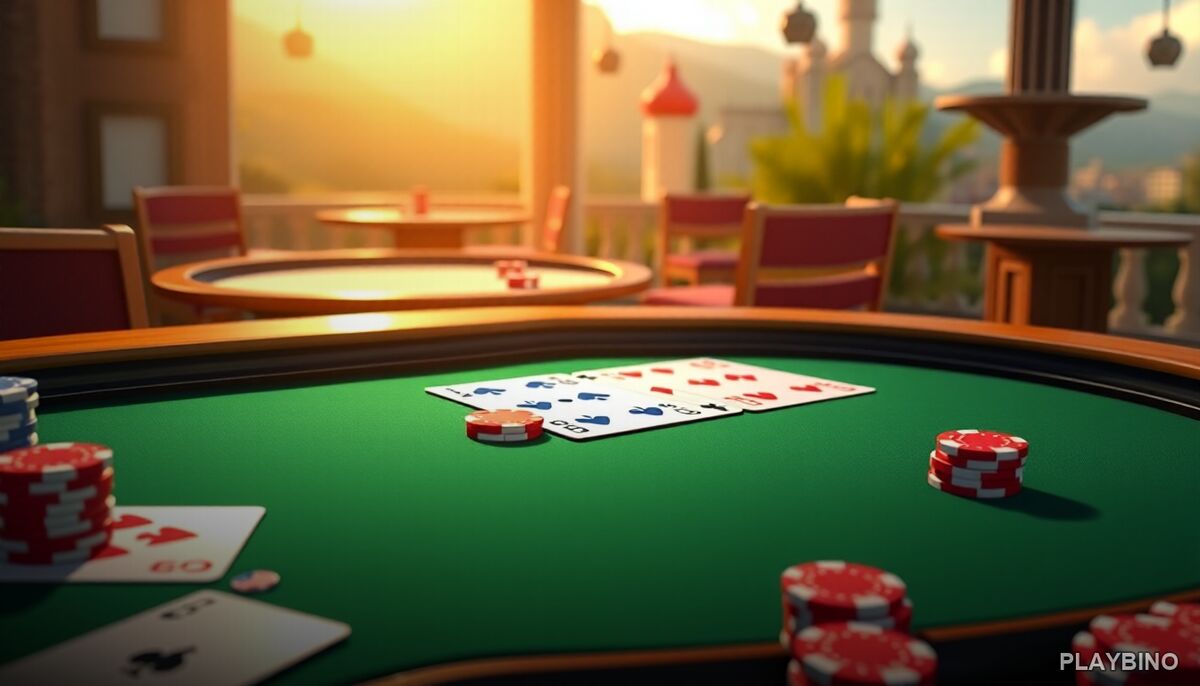
Seven Card Game brings the structure of seven-card stud poker into a focused, single-player browser format. Each round deals cards gradually, and your job is to construct the strongest five-card hand from the seven you receive. The gradual reveal creates real tension — you never have the full picture until the hand is almost over, which means every decision carries weight. You can play it directly in your browser without any download or account required.
How the Hand Builds
Unlike Texas Hold'em, where community cards are shared, seven-card stud gives each player their own set of cards distributed across multiple streets. Some cards are dealt face-up, visible to everyone at the table, while others remain face-down. This split between public and private information is the engine of the game.
As the hand progresses, you accumulate more cards and more data. You start making judgments: does the opponent showing a pair of kings have a third one hiding face-down? Are they chasing a flush? The visible cards on the table become clues, and reading them accurately separates disciplined play from guesswork.
Betting Streets
Betting happens at multiple points throughout each hand, not just at the end. Each new card dealt opens another round of decisions. You can fold early to cut losses, call to stay in the hand, or raise when your position looks strong. The timing of these choices — when to apply pressure and when to retreat — is where the real strategic depth lives.
Building the Best Five-Card Combination
You receive seven cards but only submit five. That selection process is deceptively important. Players sometimes hold onto a weaker hand out of habit or optimism, missing a stronger combination that was already available. Standard poker hand rankings apply: pairs, two pair, three of a kind, straight, flush, full house, four of a kind, and straight flush all factor into your evaluation.
Reading Partial Information
Because several cards are visible across the table, you can track which cards are already out of play. If you need a specific card to complete a straight and two of that rank are already showing in opponents' hands, the odds shift against you. This kind of dead card awareness is a core logic skill the game rewards consistently.
Patience as a Mechanic
Seven Card Game is not a fast-click arcade experience. It rewards restraint. Folding a marginal hand early is often the correct move, even when it feels like giving up. The game creates pressure to stay in — you've already committed chips, the hand looks salvageable — but disciplined players recognize when the math no longer supports continuing.
This patience mechanic is what makes it genuinely brain-engaging rather than luck-dependent. You are always processing information, weighing probabilities, and making calculated choices under uncertainty.
Who Plays This Well
Players who enjoy logic puzzles and strategy games tend to adapt quickly to this format. The rules are grounded in real poker tradition, so anyone familiar with card game fundamentals will find the mechanics intuitive. At the same time, the gradual card reveal and betting structure offer enough complexity to keep experienced players engaged beyond the first few rounds.
Magic Solitaire takes a different approach to card-based gameplay — that one leans into single-player card sequencing if you prefer a more solitary, puzzle-style challenge rather than competitive hand-building.
Strategy Tips Worth Knowing
- Track face-up cards across all hands to estimate what's still available in the deck.
- Fold early when your first three cards show no clear path to a strong combination.
- Raise confidently when you hold a strong hand and opponents are showing weakness.
- Avoid chasing straights or flushes when the required cards are already visible elsewhere.
- Use betting patterns to apply pressure even when your hand is incomplete.
Seven Card Game on PlayBino delivers a clean, no-frills poker experience built around real decision-making. If you want a card game that rewards observation and calculated risk over reflexes, this format holds up well across multiple sessions.