This Time For Africa: Maze Puzzles Across a Continent
A Maze Game With a Geographic Backbone
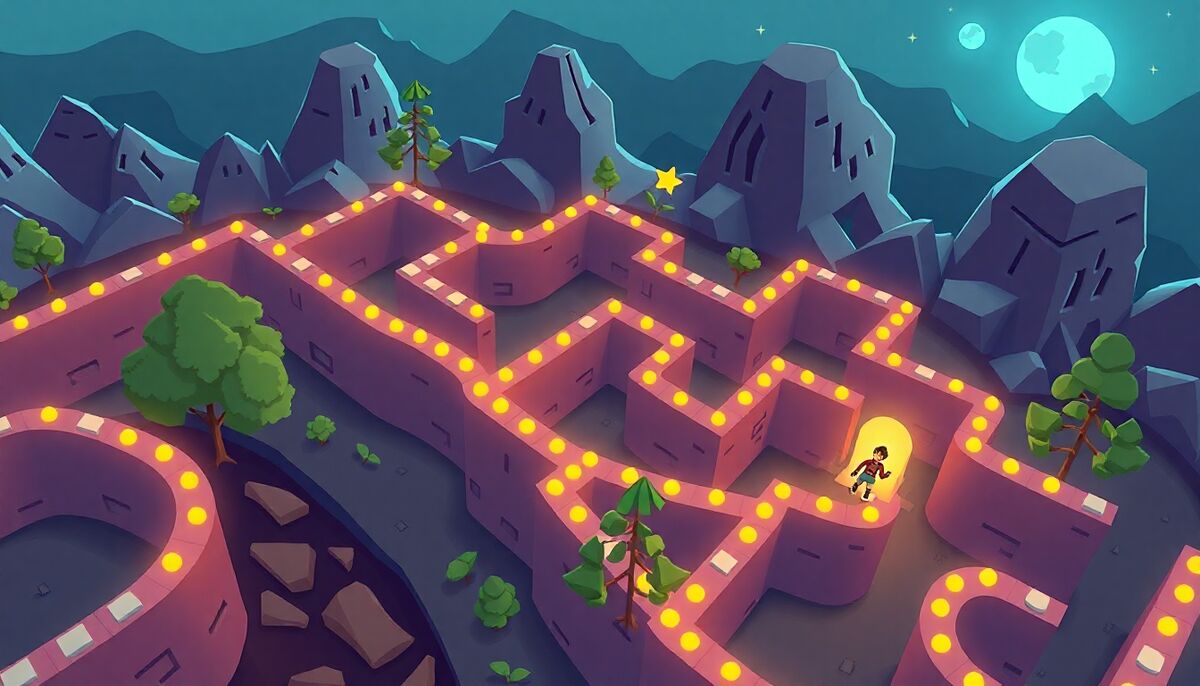
Most maze games drop you into abstract corridors with no context. This Time For Africa takes a different approach by anchoring every puzzle to a specific African country. Each level you complete represents a nation on the continent, and clearing it unlocks the next one in a structured geographic journey. The result is a logic and brain puzzle experience that feels like exploration rather than repetition. You can play this browser maze challenge on PlayBino without any downloads or installs.
How the Pathfinding Works
The core mechanic is straightforward: navigate from the maze entrance to the exit. What makes it engaging is how the layouts are constructed. Corridors wind tightly, dead ends appear frequently, and the correct route is rarely obvious from the starting position. The spatial problem-solving demands that you mentally map what you have already explored before committing to a new direction.
Reading the Maze
Early levels introduce wider paths and fewer branching points, giving players time to understand how the maze logic operates. As the game progresses, the corridors narrow and intersections multiply. The challenge scales steadily rather than spiking unpredictably, which keeps the difficulty curve fair.
Planning Before Moving
Rushing through intersections leads to backtracking. The more effective approach is to scan visible sections of the maze before moving, identify dead ends early, and prioritize unexplored branches. This kind of deliberate observation is what separates quick completions from long, frustrating loops.
The Continental Progression System
Completing one country unlocks the next, creating a chain of puzzles that moves across Africa's diverse regions. This structure gives the game a sense of forward momentum that pure maze games often lack. There is always a next destination, and the geographic framing makes each unlock feel like a small achievement beyond just solving a puzzle.
The educational layer is subtle but present. Players encounter the names and implied positions of African nations as they progress, which adds a layer of geographic awareness without turning the game into a lesson. It works because the maze mechanics carry the experience on their own merits.
Who This Game Suits
- Players who enjoy logic and brain puzzles that reward careful observation
- Anyone looking for a calm, single-player challenge without timers or combat pressure
- People interested in geography who want a light interactive format
- Puzzle fans who prefer structured progression over randomized levels
Maze Complexity as the Game Advances
The later levels introduce noticeably tighter layouts. Corridors that once allowed easy scanning become dense networks where a single wrong turn wastes significant time. The game does not introduce power-ups or shortcuts, so the only tool available is spatial reasoning. This keeps the focus entirely on the puzzle itself rather than on resource management or timing mechanics.
For players who enjoy a different kind of puzzle structure, another logic-based browser puzzle worth exploring is World of Alice Pirate Treasure, which approaches problem-solving from a different angle.
What Makes the Format Hold Up
The geographic theme prevents the game from feeling like a generic maze generator. Each level has an identity tied to a real place, which gives even simple puzzles a small sense of purpose. The absence of gimmicks means the design relies entirely on layout quality, and the steady complexity increase suggests the levels were constructed with deliberate attention to how players think through spatial problems. For a single-player puzzle game built around pathfinding and logic, the format is clean and the progression is satisfying.