Value Multiplier: Strategy, Placement, and the Push for Higher Scores
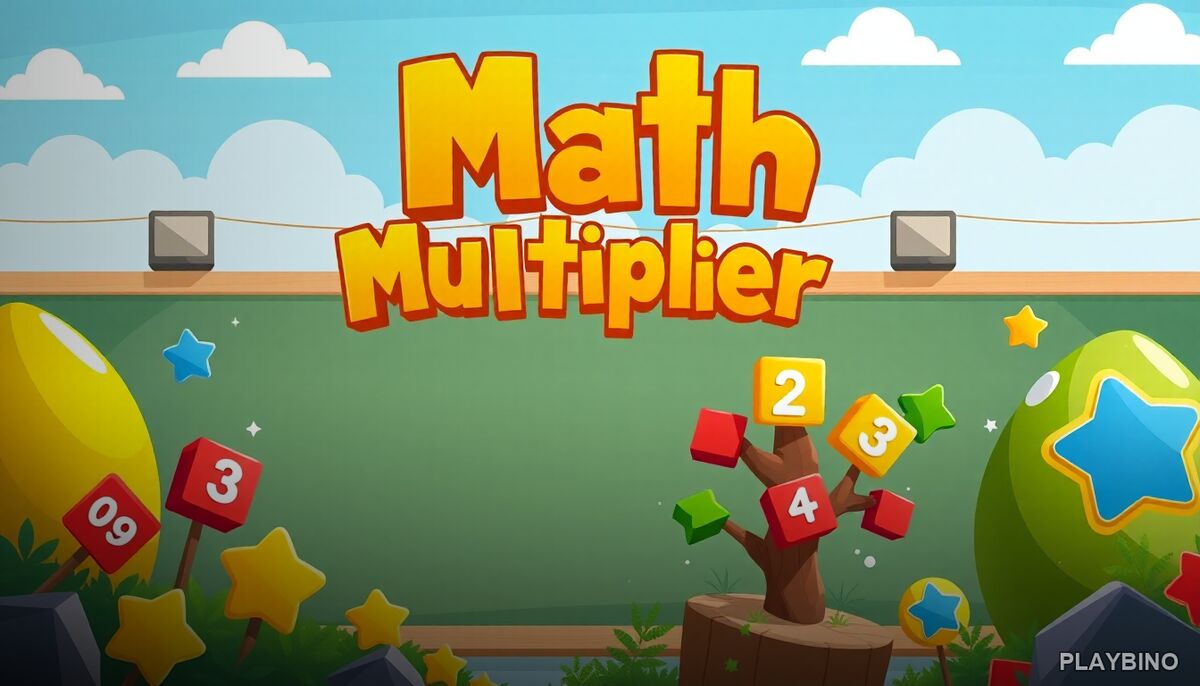
What Kind of Game Is This?
Not every puzzle game asks you to think in numbers, but Value Multiplier builds its entire challenge around them. Numbered blocks sit on a grid, and your job is to combine them in ways that multiply their values upward. The higher the resulting number, the better your score. It sounds simple at first, but the decision-making behind each placement becomes genuinely demanding as the grid fills and space runs short.
The game sits firmly in the logic and strategy puzzle category. It rewards players who think ahead rather than react, and it punishes careless placement with dead ends that are hard to recover from. Try the full challenge directly in your browser without any download or setup.
How the Placement Mechanics Work
Each block carries a specific numerical value. When you place two compatible blocks together on the grid, they combine and generate a new block with a multiplied value. That new block can then be part of another combination, creating a chain effect that pushes your score significantly higher if you plan the sequence correctly.
Timing Your Combinations
The order of placement matters as much as position. Placing a high-value block too early, before setting up adjacent combinations, often wastes its potential. Holding it until surrounding blocks are ready creates a much larger multiplier payoff. The game constantly asks you to weigh immediate gains against future setups.
Managing Grid Space
As combinations resolve, new blocks appear. The grid never stays empty for long. Limited space means every placement either opens future options or closes them. When obstacles appear across the grid, they break up natural combination zones and force you to rethink the routes you were building toward.
Obstacles and Adapting Your Strategy
Obstacles are not just visual clutter. They actively reshape which parts of the grid are usable. A combination chain that worked in an open area may become impossible once a blocker appears between two key blocks. Recognizing this early and adjusting your plan before the grid locks up is one of the more satisfying skills the game develops over time.
This adaptive quality is what separates Value Multiplier from purely static logic puzzles. The board changes, and your strategy has to change with it. Players who enjoy number-based thinking and spatial reasoning will find this tension genuinely engaging.
Scoring and Progression
Score growth is not linear. A well-executed chain of multiplications can jump your total dramatically in a single move, while a series of low-value placements barely moves the needle. Understanding the multiplication patterns and recognizing which block combinations produce the largest jumps is the core skill the game teaches through repetition.
- Single combinations produce modest score increases
- Chained multiplications across multiple blocks scale quickly
- Obstacle placement changes the viable combination routes mid-game
- Running out of space ends the run, so grid awareness is essential
Who This Game Suits
If you enjoy number puzzles, grid-based strategy, or logic games that reward planning over reflexes, Value Multiplier fits that profile well. The clean visual design keeps the focus entirely on the numerical puzzle without distracting elements. There are no timers pushing you to rush, which means the pressure comes entirely from the grid itself rather than a countdown.
Battle Cards takes a very different approach to strategy — if that kind of card-based decision-making interests you, that game has its own distinct mechanics worth exploring. Both games share a focus on planning and consequence, just through different systems.
Getting Better Over Time
Early runs in Value Multiplier often end with unused blocks and a grid that locked up too soon. That is normal. The multiplication patterns become more readable after a few sessions, and you start to see two or three moves ahead rather than reacting to what is already on the board. PlayBino hosts the game with no friction, so returning for another run takes seconds. The loop is short enough to replay often, which is exactly how the strategy knowledge builds.