Wallbound Explorer: Master the Wall-Bounce Maze
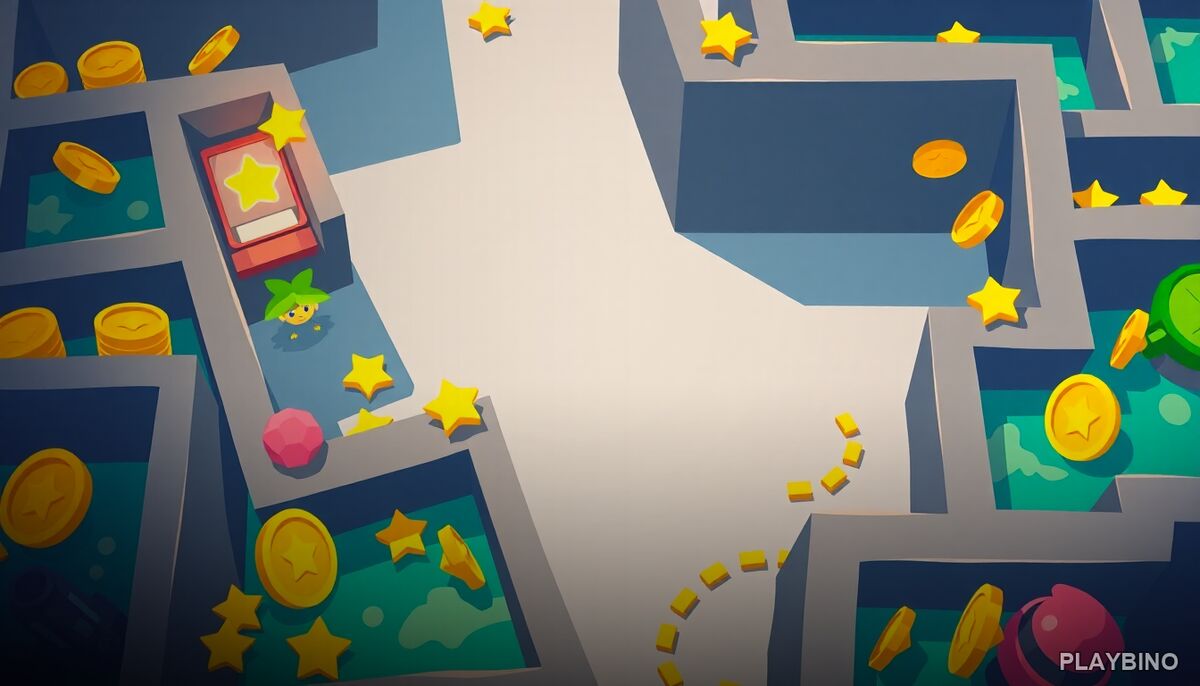
A Different Kind of Maze Game
Most maze games ask you to avoid walls. Wallbound Explorer asks you to use them. The entire movement system is built around bouncing off barriers, which means every wall you hit is a decision, not a mistake. That shift in thinking is what makes this single-player puzzle and skill game feel genuinely different from standard navigation challenges. You can play it directly in your browser without any downloads or setup.
How the Wall-Bounce Mechanic Works
Your character does not move freely through open space. Instead, momentum carries you in a fixed direction until you strike a wall, at which point the angle of impact determines your new trajectory. Think of it like a billiard shot, except the pockets are scattered coins and the table keeps getting more complicated.
Timing and Angles
The core skill here is reading angles before you commit to a move. A bounce that looks like it will reach a coin can easily send you into a dead end if you misjudge the wall geometry. Early levels give you room to experiment, but the game quickly tightens the corridors and forces more precise calculations.
Planning vs. Reacting
Some stages reward deliberate route planning, where you map out a chain of bounces mentally before moving. Others throw sudden layout changes at you that demand fast reflexes and mid-run adjustments. Wallbound Explorer balances both modes well, so neither pure strategists nor instinct-driven players will feel left out.
What Each Level Demands
Coin collection is the main objective, but coins are rarely placed conveniently. They sit in corners, behind narrow passages, or along routes that require multi-step bounce sequences to reach. Collecting all of them in a stage is a genuine spatial puzzle, not just a matter of wandering around.
As levels progress, the arrangements grow more demanding. Tighter corridors reduce your margin for error. More complex wall patterns mean a single miscalculated bounce can cascade into several wrong turns. The difficulty curve feels earned rather than arbitrary, because each new challenge builds on mechanics you have already been practicing.
Strategy Tips for Tougher Stages
- Scan the full level layout before your first move to identify coin clusters and natural bounce paths.
- Work backwards from hard-to-reach coins: figure out which wall angle delivers you there, then plan how to reach that angle.
- Do not chase the nearest coin first if doing so blocks a cleaner route to the rest.
- When a plan fails, pause and reassess rather than bouncing randomly hoping for a lucky outcome.
- Short controlled bounces are often safer than long diagonal shots across wide open sections.
Who This Game Suits
If you enjoy puzzle games that reward spatial reasoning and careful observation, Wallbound Explorer sits comfortably in that category. The skill component means there is also a satisfying physical element to mastering each stage, which makes it appealing to players who like a bit of reflex challenge alongside the logic. It is a one-player experience, so the focus stays entirely on your own improvement and route efficiency.
Frisbee 3D on PlayBino takes a completely different approach to trajectory-based gameplay — that arc-and-aim challenge is worth a look if you enjoy games where reading angles and predicting flight paths is the central skill.
Why the Concept Holds Up
Wall-bouncing as a primary movement system is not a common mechanic in browser puzzle games, and Wallbound Explorer uses it consistently across every level rather than treating it as a gimmick. The puzzle-like structure keeps stages feeling fresh, and the gradual complexity increase means there is always a new spatial problem to solve. For players who like thinking a few moves ahead while still needing quick hands, this game delivers a clean and focused challenge.